
Shringar Guide
The complete guide to dressing and adorning your Laddu Gopal
The Sacred Art
What is Shringar?
Shringar, in the Vaishnav tradition, is the sacred art of dressing and decorating the deity. It is not merely a cosmetic act. It is an expression of deep love and devotion. When a devotee adorns their Laddu Gopal with beautiful poshak, jewellery and flowers, it is an act of seva (selfless service) that nurtures the bond between the bhakt and Bhagwan.
The tradition of shringar comes from the Pushti Marg sampradaya, where Shrinathji and Laddu Gopal are dressed in elaborate seasonal outfits that change with the time of day, the season and the festival. Each element of shringar, from the poshak fabric to the flower garland, carries spiritual significance.
Whether you are a new devotee setting up your first home temple or an experienced bhakt looking to refine your shringar practice, this guide covers everything you need to know to dress your Kanha Ji with love and authenticity.
The Complete Set
Essential Shringar Items
Poshak (Dress)
The poshak is the foundation of Laddu Gopal's shringar. It includes the main garment that drapes around the idol, typically a dhoti-kurta, angrakha, lehenga or a complete set. The poshak sets the tone for the entire look and is chosen based on the occasion, season and festival.
Pro tip: Keep at least 7 poshak for daily rotation and additional special ones for festivals.
Mukut (Crown)
The mukut is the ornate crown placed on Laddu Gopal's head. It is one of the most recognisable elements of Krishna's form. Mukut come in various styles: peacock feather, traditional Mathurawali, Rajasthani meenakari, stone-studded and golden filigree. A well-chosen mukut lifts the entire shringar.
Pro tip: Match the mukut metal tone (gold, silver, rose gold) with the poshak embellishments for a cohesive look.
Haar (Necklace)
A haar or necklace adorns Thakurji's neck and adds a regal touch. From delicate single-strand chains to elaborate multi-layered temple jewellery sets, the haar should complement the poshak's neckline. Pearl haar pairs beautifully with pastel poshak, while kundan or polki suits festive wear.
Pro tip: For daily wear, keep a simple gold-toned haar. Save elaborate sets for special occasions.
Bansuri (Flute)
The bansuri is Krishna's eternal companion. A miniature flute placed in Laddu Gopal's hands completes the divine Murlidhar form. Bansuri come in gold, silver, wooden and jewelled varieties. The right size bansuri should be proportionate to your idol, not too long and not too short.
Pro tip: The bansuri should be roughly 1.5 times the width of the idol for the best proportions.
Chhadi (Stick) & Chhatra (Umbrella)
A chhadi (ornamental stick) or chhatra (small umbrella) adds variety to the shringar. During Govardhan Puja, a chhadi is essential as it represents Krishna lifting the Govardhan hill. A decorative chhatra adds a royal look and is popular during processions and celebrations.
Pro tip: Keep a dedicated Govardhan chhadi ready well before the Annakut festival.
Singhasan (Throne)
The singhasan is Thakurji's sacred seat. It forms the backdrop and base for the entire shringar. Available in wood, marble, metal and ornate designs, the singhasan should match the overall aesthetic of your temple. Seasonal singhasan decoration, with fabric draping, fairy lights and flowers, enhances the divine ambience.
Pro tip: Dress the singhasan with matching fabric to coordinate with the day's poshak colour scheme.
From Bath to Aarti
Step-by-Step Shringar Process
Prepare with Devotion
Begin by washing your hands and setting a clean workspace. Lay out the chosen poshak, accessories and flowers. Light a diya or agarbatti to create a sacred atmosphere. Many devotees recite a short mantra or prayer before starting the shringar to invoke divine blessings.
Bathe and Clean the Idol
Gently bathe your Laddu Gopal with warm water (or milk, honey and water for abhishek on special occasions). Pat dry with a soft, clean cloth. Ensure the idol is completely dry before dressing. Moisture can stain delicate fabrics like silk and velvet.
Apply Tilak and Chandan
Using a thin stick or the tip of your ring finger, apply a small tilak of chandan (sandalwood paste) on Thakurji's forehead. Some devotees also apply chandan on the arms and feet. This step is both devotional and adds a beautiful traditional mark.
Dress the Poshak
Carefully drape the poshak on the idol. Start with the lower garment (dhoti or lehenga), securing it gently. Then add the upper garment (kurta, angrakha or dupatta). Adjust the pleats and draping so the fabric falls naturally. Ensure the outfit is snug but not tight.
Add the Mukut and Jewellery
Place the mukut gently on the head, adjusting it so it sits straight and secure. Add the haar around the neck, bajuband on the arms if you have them, and any other jewellery pieces. Place the bansuri in the hands. Each piece should complement the poshak.
Garland and Final Touches
Drape a fresh or artificial flower mala around the neck. Arrange the singhasan backdrop, add any seasonal decorations, and place small offerings of fruit or sweets nearby. Step back and admire your Thakurji's complete shringar. Conclude with aarti.
Visual Gallery
Shringar Inspirations
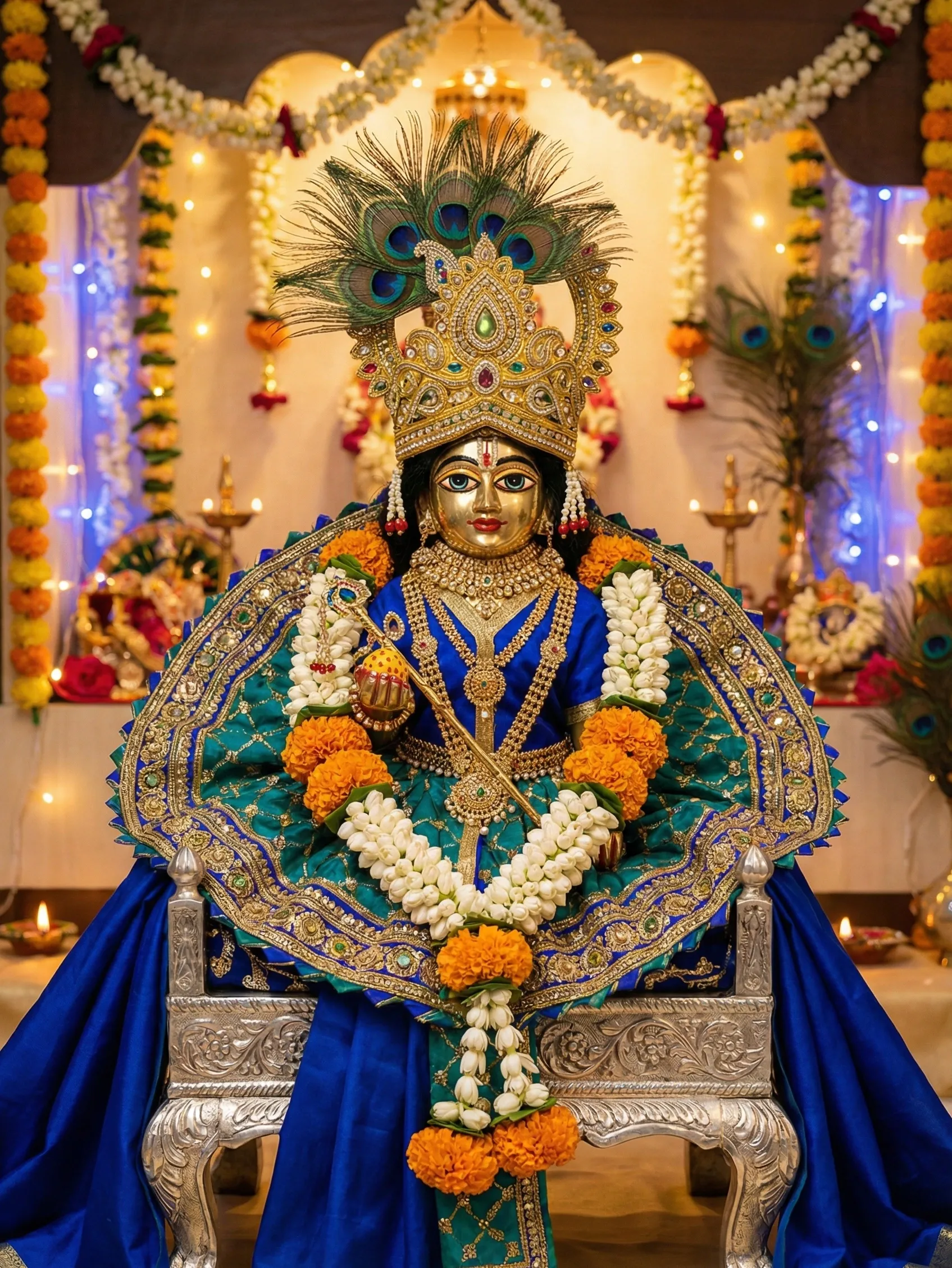
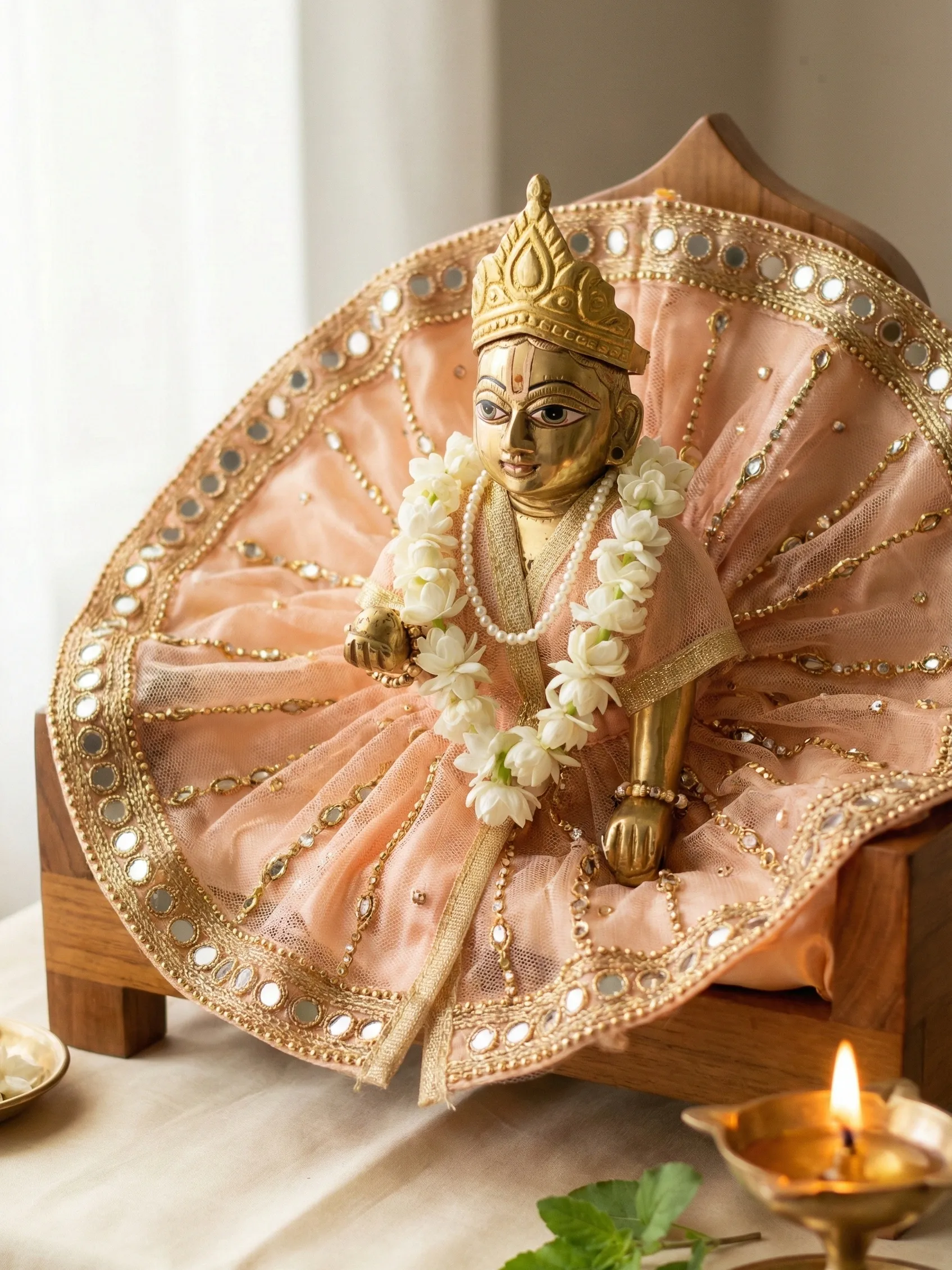
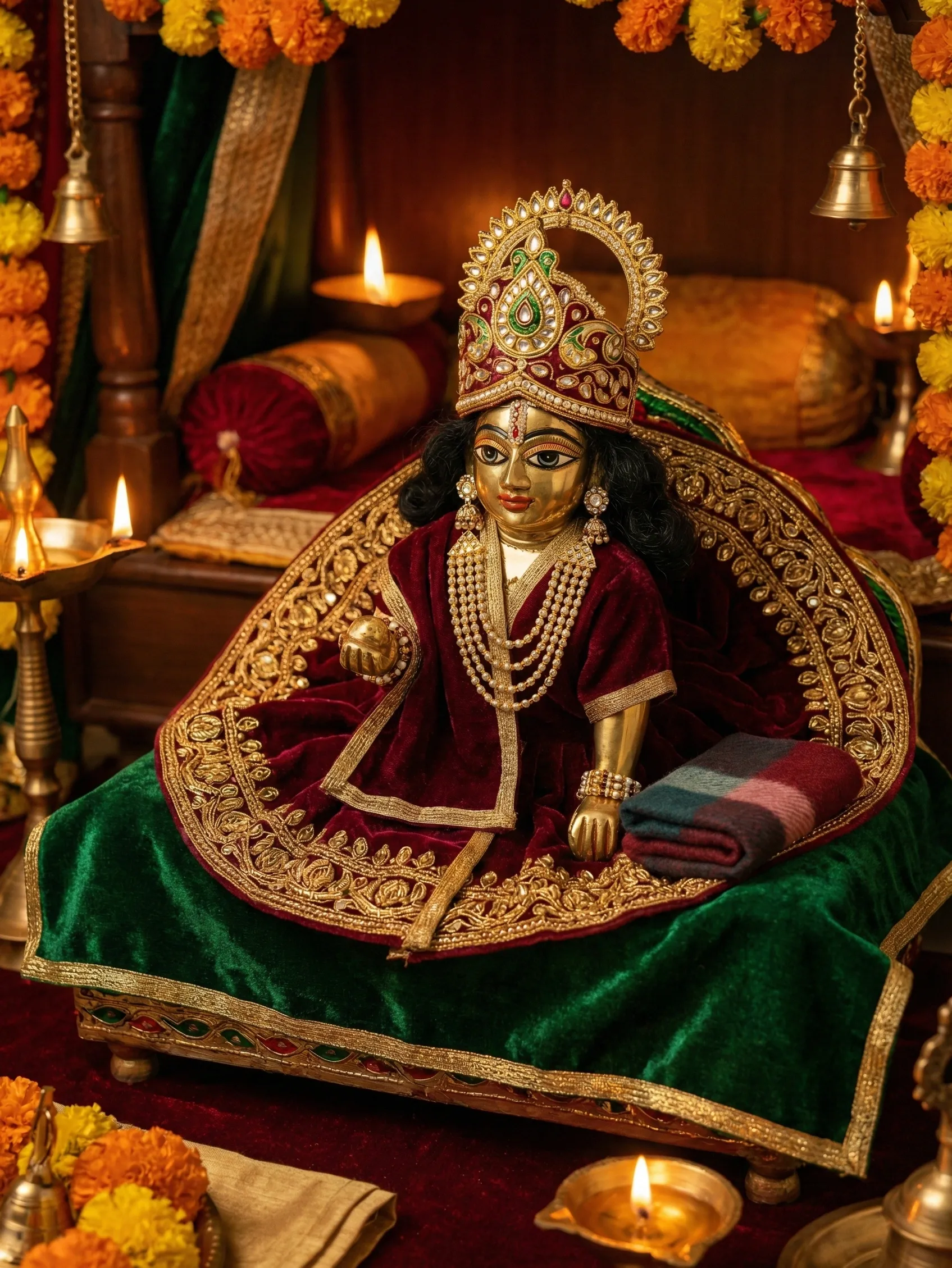
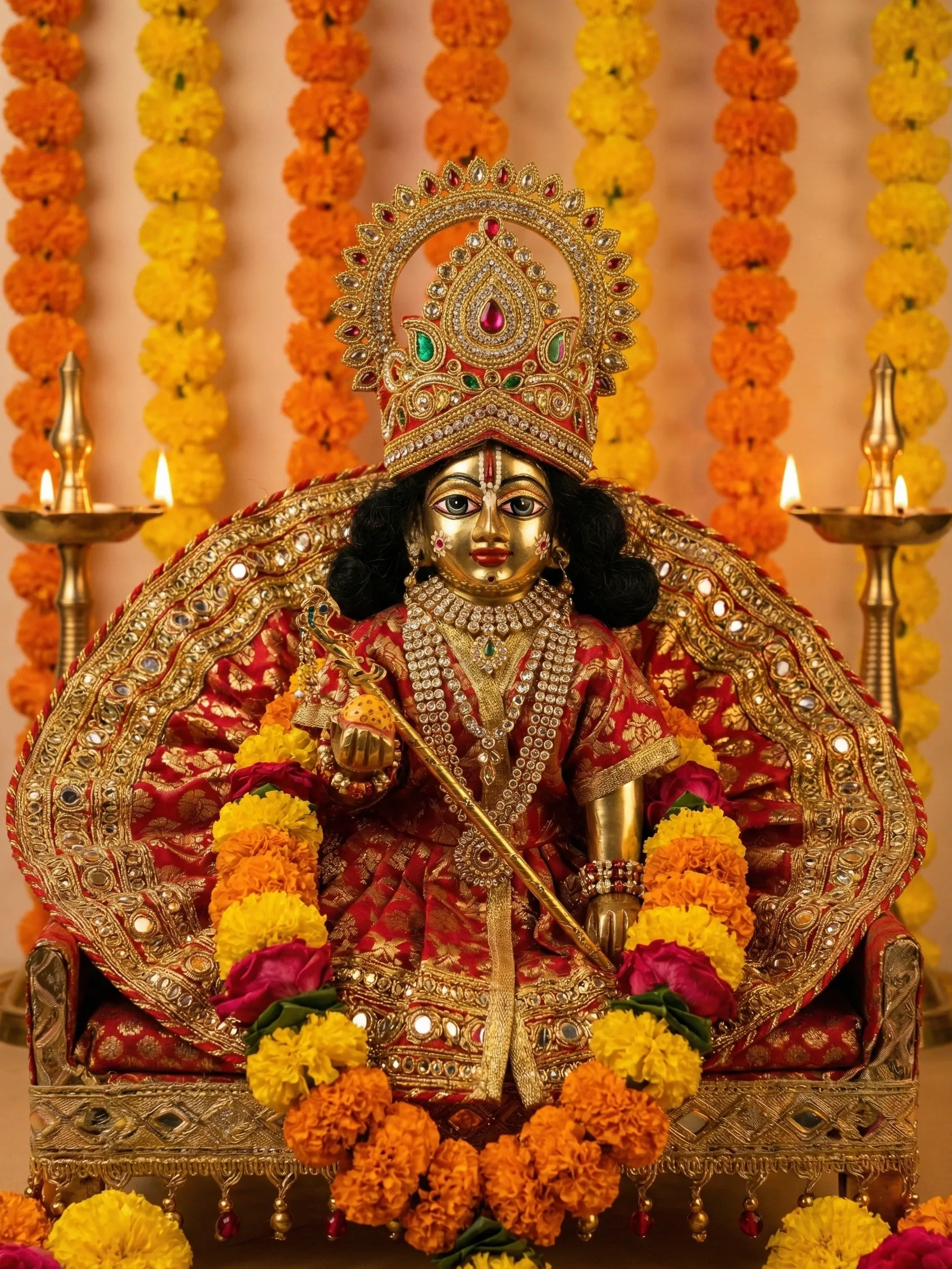
Season & Occasion
Festival-Specific Shringar Tips
Elaborate and grand. Full jewellery set, peacock mukut, fresh flower decoration. Midnight aarti shringar is the highlight of the year.
Rich velvet or brocade poshak with heavy zari work. Govardhan chhadi prop. Singhasan decorated with fairy lights and marigold.
Light cotton or washable poshak in white with colourful accents. Gulal-themed decoration. Radha-Krishna pair look.
Simple yet elegant cotton or silk poshak. Rakhi tied on wrist. Festive but not over-the-top shringar.
Warm velvet poshak with heavy embroidery. Woollen blanket on singhasan. Cosy, layered look with extra accessories.
Light cotton, chanderi or georgette poshak. Minimal jewellery. Fresh flower mala daily. Cool, breathable fabrics.
Begin Your Shringar Journey
Explore our collection of poshak, accessories and shringar sets. Every piece is handcrafted with devotion and designed to make your Thakurji look divine.