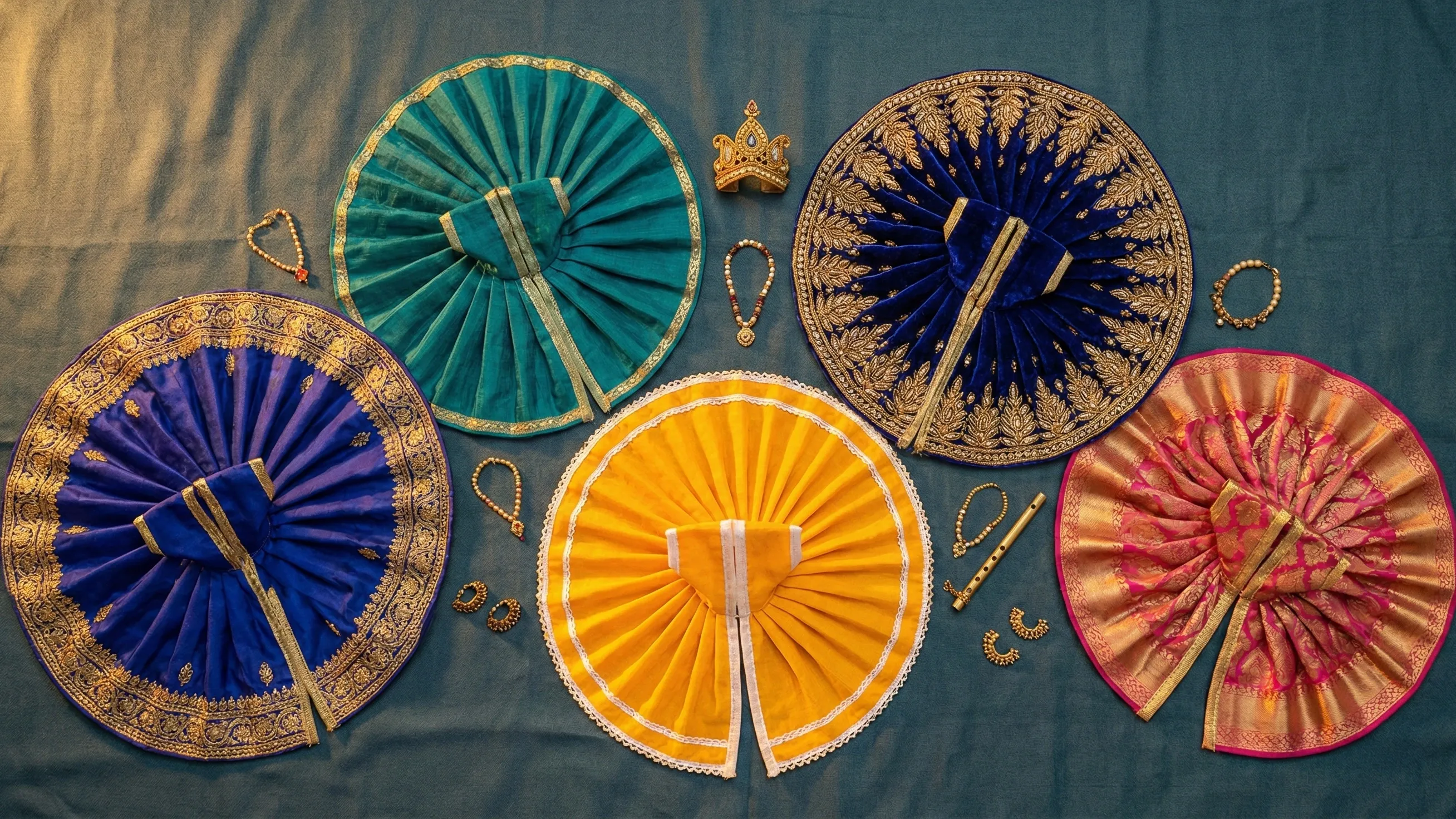
Most devotees give a great deal of thought to the poshak they choose for their Laddu Gopal, and rightly so. But the mukut (crown), jewellery pieces, bansuri (flute), and singhasan (throne) that complete Thakurji's shringar often receive far less deliberate care — not out of neglect, but simply because no one has explained what that care looks like in practice. These accessories are made from a range of materials: cast metal, plated brass, lacquered wood, stone settings and delicate wire work. Each responds differently to time, humidity, handling and the environment of a puja space. Understanding what each material needs — and what silently harms it — is the foundation of keeping your Kanha Ji's shringar looking beautiful not just this season but for many years ahead.
Cleaning Jewellery and the Mukut Without Causing Harm
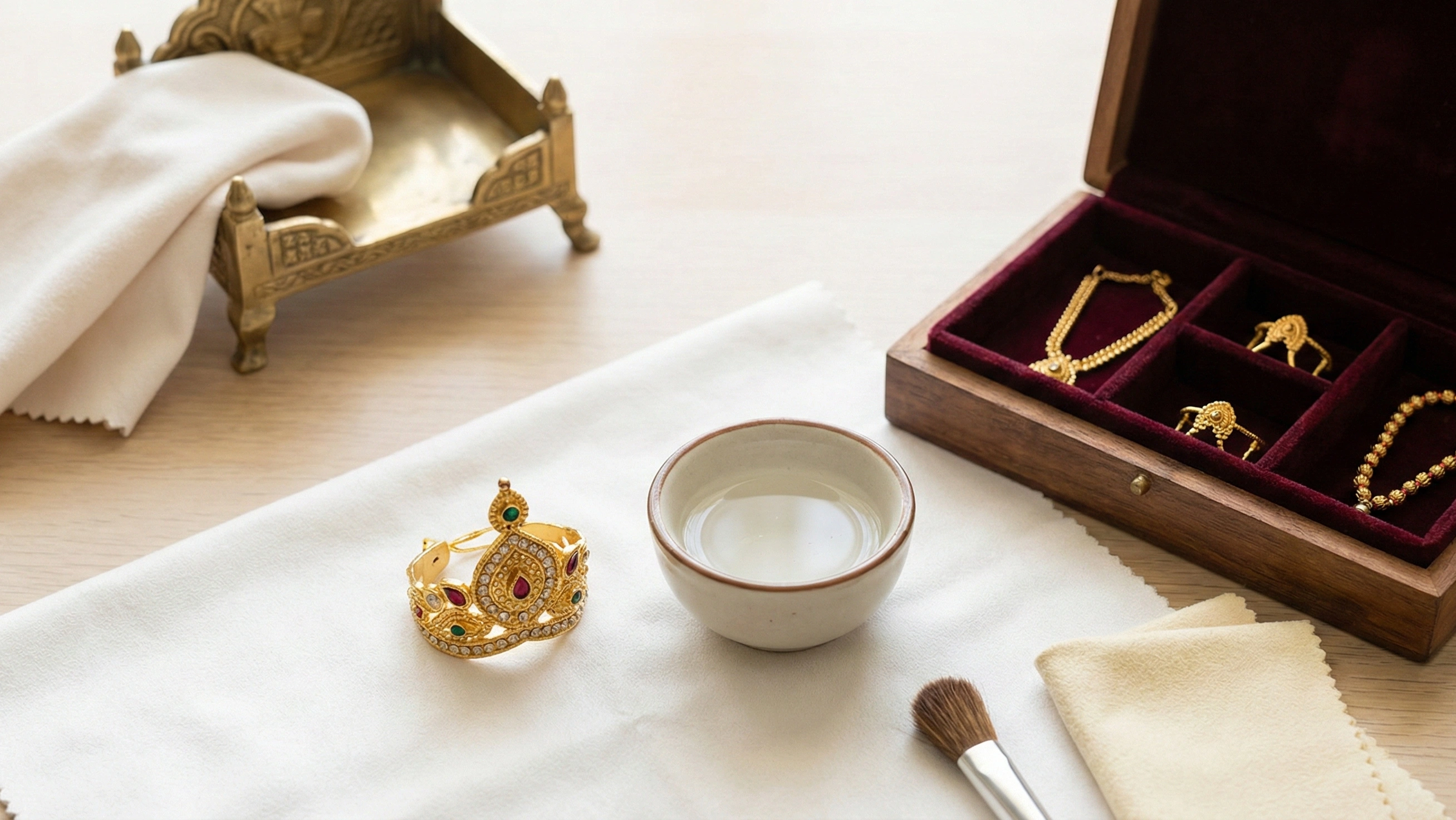
The instinct when something looks dull is to scrub harder or use a stronger cleaner — but with Laddu Gopal jewellery and mukut pieces, restraint is everything. Plated metal and stone-set accessories are far more fragile than they appear. For everyday dust and light discolouration, a soft cloth barely dampened with plain water is enough. Where tarnish has built up in crevices or around stone settings, a very soft-bristled brush — the kind sold for cleaning spectacle frames or jewellery — dipped in a mild soap solution works well, but the key is to rinse quickly and dry immediately and completely. Moisture left sitting inside a stone setting or in the hollow joints of a mukut is the most common cause of damage: it accelerates tarnish, loosens adhesives that hold ornamental stones, and can stain the metal beneath a plating in ways that are difficult or impossible to reverse.
- Use a soft, barely damp cloth for routine weekly cleaning — this removes dust and fresh tarnish before it sets
- For crevices and detail work, use a soft-bristled brush with a mild soap solution — never an abrasive paste or chemical metal polish on plated pieces
- After any wet cleaning, dry thoroughly with a soft cloth immediately — do not leave pieces to air-dry, as moisture sitting in joints and settings causes long-term damage
- Check stone settings gently after each cleaning — if a stone feels even slightly loose, set that piece aside and have it repaired before returning it to seva
- Avoid cleaning heavily embellished mukut pieces with wire filigree while they are assembled — work on each component separately if possible
Tip: If a jewellery piece or mukut has decorative stones or kundan (glass stone) work, test any cleaning method on a hidden area first. Kundan stones are set with lac and wax adhesives that can soften with heat or prolonged moisture — treat them with particular gentleness.
What Agarbatti Smoke and Moisture Do Over Time
The puja space is, by its very nature, not an ideal environment for metal accessories. Agarbatti (incense sticks) are central to daily worship and fill the air with fragrant smoke — but that smoke carries sulfur compounds that react with metal surfaces, gradually dulling their finish and producing the grey-black tarnish that devotees often notice after a few months of regular seva. This is not a sign that anything is wrong with the piece; it is simply chemistry. The sensible response is not to stop burning agarbatti, but to be mindful of where the incense is placed relative to the mukut and jewellery display, and to incorporate cleaning into your regular care routine rather than waiting until tarnish becomes severe. Moisture is the other quiet adversary. Bathrooms adjacent to puja rooms, the natural humidity of monsoon months, and even the steam from aarti diyas can create enough ambient dampness to accelerate tarnish and loosen stone settings over time. Good ventilation and thoughtful placement go a long way.
- Position agarbatti holders so that smoke drifts away from the mukut and jewellery display rather than directly over them
- During monsoon months, keep the puja area well ventilated — a small electric desiccant (silica gel packet) placed near the storage area helps control humidity
- After aarti, allow steam and smoke to disperse before returning covers or storage cases to the accessories
- Clean more frequently during monsoon — monthly cleaning may be sufficient in dry winter months, but fortnightly is wiser in summer and rainy seasons
Storing Jewellery and the Mukut Properly
How accessories are stored between uses matters almost as much as how they are cleaned. The most common source of damage to Laddu Gopal jewellery is not use but storage — pieces placed loosely together in a single box or drawer, where they knock against each other, scratch, tangle, and accumulate ambient moisture without protection. Velvet-lined pouches or small sectioned boxes — the kind available at any craft or jewellery supply shop — are the ideal solution. Each piece rests in its own space, cannot scratch its neighbours, and is shielded from humidity by the lining fabric. The mukut, being the most structurally complex piece, deserves a box of its own: one just large enough to hold it without compression, where no other item presses against its wire frame or stone settings. Storing accessories in a cool, dry location away from direct sunlight also prevents the gradual fading of enamel work and coloured lacquer that extended light exposure can cause.
- Use individual velvet-lined pouches for jewellery pieces — one piece per pouch prevents scratching and tangling
- Store the mukut in its own box with enough room that nothing presses against its frame or stones
- Keep all storage in a cool, dry area away from direct sunlight and away from the bathroom wall of any adjacent room
- Place a silica gel packet inside the storage box during monsoon months to absorb excess moisture
- Periodically open storage boxes in dry weather to air the contents — a few hours of fresh air every month prevents musty odours and reduces humidity build-up
Tip: Before placing a recently cleaned jewellery piece back into storage, leave it out for an extra thirty minutes in a dry room to ensure it is completely dry. Sealed storage retains any residual moisture and turns it into a tarnish accelerator.
The Bansuri and the Singhasan: Overlooked but Important
The bansuri in Kanha Ji's hands and the singhasan beneath him are not jewellery in the conventional sense, but they require equally consistent care and are often overlooked entirely. A metal bansuri — the most common type — benefits from the same soft-cloth dusting and occasional mild-soap cleaning as the jewellery pieces. The detail that requires extra care is the joint where metal meets lacquered wood at the mouthpiece, if the piece has a wooden element: water allowed to sit at that junction will lift the lacquer finish and stain the wood underneath. A quick wipe dry after any damp cleaning is all that is needed. The singhasan presents its own set of materials. A carved wooden throne should be dusted regularly with a soft, dry brush to clear incense ash from the carvings, and an occasional wipe with a light, natural wood polish will keep the grain from drying out and cracking over time. The metal portions of a mixed-material singhasan — brass feet, rails, or ornamental panels — can be wiped with a damp cloth and dried immediately, just as you would treat the jewellery. What these pieces have in common is that their care is not complicated; it simply needs to be regular.
- Dust the bansuri weekly with a soft dry cloth — ash and dust accumulate quickly in the joins and decorative engravings
- For wooden singhasan, use a soft dry brush for regular dusting of carved areas, and apply a light natural wood polish every few months to prevent drying and cracking
- Wipe metal portions of the singhasan with a barely damp cloth and dry immediately — never use chemical furniture polish on metal-and-wood mixed pieces
- Keep the singhasan free from spill exposure — water from flower offerings, aarti water, or lamp oil can stain both wood and metal if not wiped promptly
Handling Accessories With the Right Intention
There is one more habit that experienced devotees will recognise immediately as important: always handle Thakurji's jewellery and mukut with clean, dry hands. The natural oils and moisture from our skin transfer readily to metal surfaces and are among the most common causes of fingerprint tarnish on polished pieces. This is not about ritual purity alone — it is genuinely practical advice. Keeping a small, clean cloth near the puja space to wipe hands before handling ornaments takes two seconds and makes a visible difference over time. The same care applies when changing the mukut during poshak changes: hold it by the base frame or band rather than gripping the ornamental upper structure where the stone work and wire filigree are most delicate. Treated with this level of everyday attention — clean hands, regular dusting, seasonal deep-cleaning, and thoughtful storage — the accessories that adorn your Laddu Gopal will remain as luminous as the day you first placed them in his seva. At Gopalji Fashion, we recommend asking about care for any specific accessory you purchase from us; different finishes and stones have their own particular needs, and we are always happy to guide you.
Tags