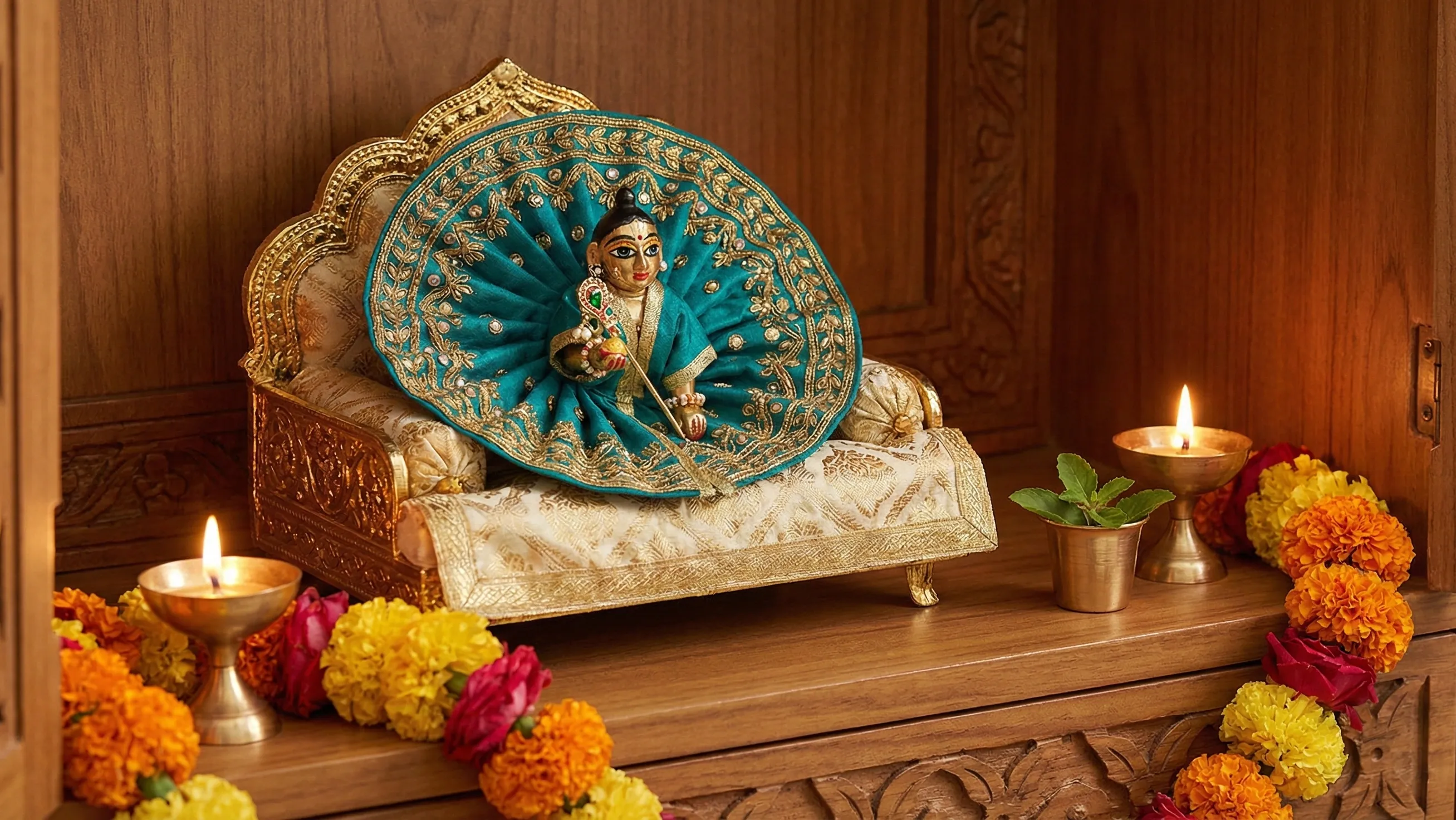
Every morning, when you lift the poshak (dress) from its fold and bring it to your Laddu Gopal, something quiet happens — the day finds its centre. For many devotees, this daily dressing ritual is the most intimate part of their seva (devotional service). It is not a task to be rushed through before the office or the kitchen. It is a conversation between you and Kanha Ji, carried in the brush of fabric across his form, in the straightening of a tiny hem, in the placement of a fresh marigold mala (garland) around his neck. Over years of caring for Thakurji, I have found that bringing a little more intention to this daily ritual — choosing the right fabric for the season, following the colour tradition of the day — transforms even a quiet weekday morning into something genuinely sacred.
Dressing Through the Seasons
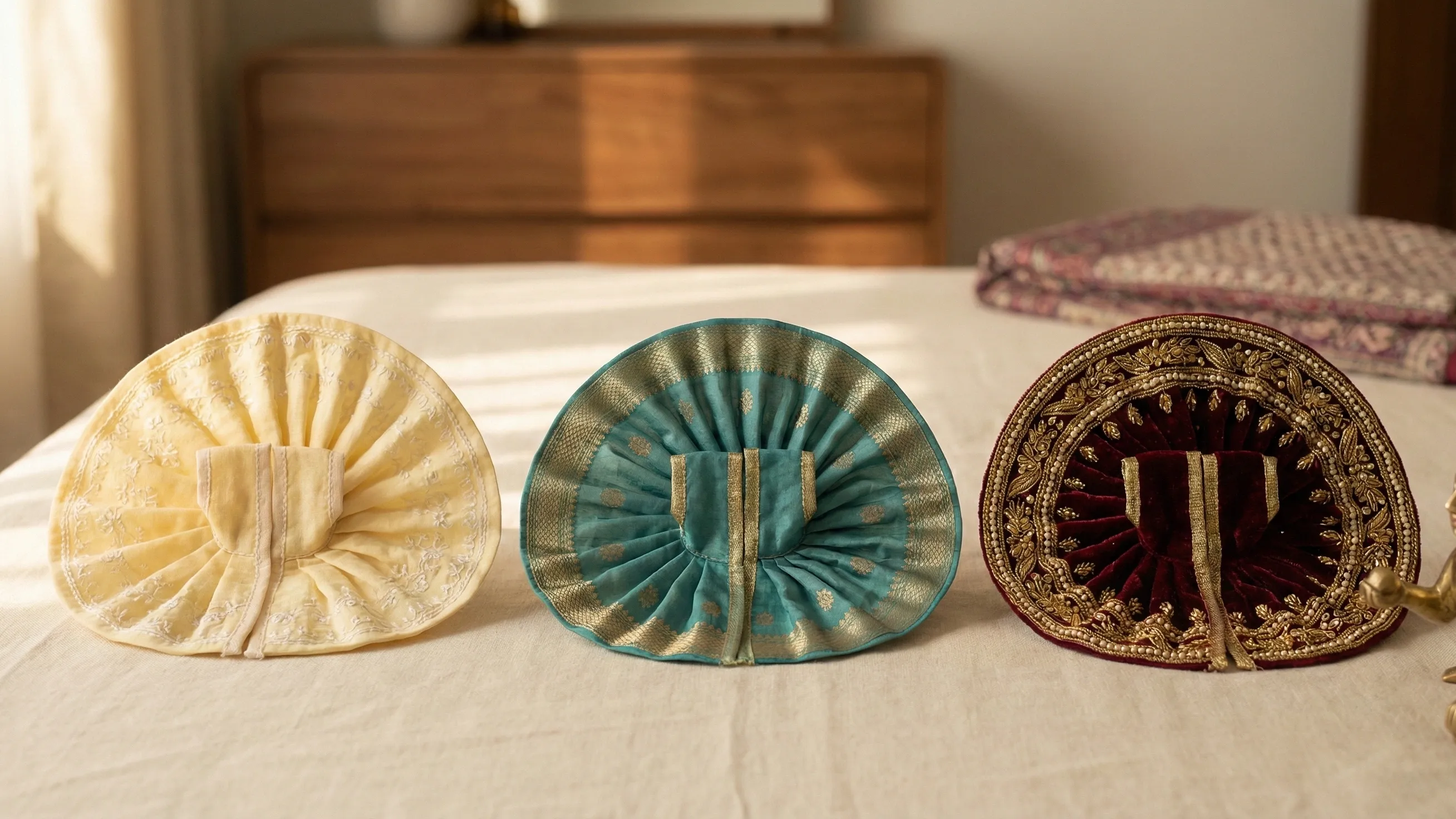
Just as we adjust our own clothing with the turning of the year, Thakurji's poshak wardrobe is best built around the seasons. This is not just about aesthetics — it is about care. Heavy velvet in the summer heat traps warmth unnecessarily, while light cotton in winter looks sparse against the cold air of the room. Seasonal fabric choices are both a practical kindness and a beautiful expression of attentiveness. The broad seasonal guide that most experienced devotees follow looks something like this:
- Summer (March to June): lightweight cotton, mulmul (fine muslin), and chanderi are ideal — their breathable weave suits the warmth; soft yellows, sky blues, pale greens, and white keep the shringar fresh and cool
- Monsoon (July to September): medium-weight cotton holds its shape better in humid conditions; deep greens and blues echo the colour of the season outside the window, and Kanha Ji looks genuinely at home dressed in the shades of a rain-washed landscape
- Winter (October to February): this is the season for velvet, wool-blend, and heavier brocade (woven fabric with raised patterns); deep jewel tones — ruby, emerald, maroon, midnight blue — look magnificent under the lamp light of the mandir during these months
- Spring (February to March): the brief season before the heat arrives is perfect for soft pastels — pale rose, mint green, lavender, and buttercream; lightweight silk works beautifully here, catching the morning light without feeling heavy
Tip: If you are building a seasonal wardrobe gradually, start with one good cotton set for summer and one good velvet set for winter. These two will cover the most demanding extremes. Add chanderi and brocade as your collection grows.
The Weekly Colour Tradition
Alongside the seasonal calendar, there is a colour tradition rooted in Indian devotional practice that assigns a sacred colour to each day of the week. Many experienced devotees who dress Kanha Ji every day find that following this tradition brings a satisfying sense of rhythm to the week — and on busy days when you are uncertain what to choose, it resolves the question immediately and gracefully. The tradition is not rigid doctrine; it is an invitation. Follow it as your heart allows.
- Monday: white or pale blue — the colours of Shiva's day, of purity and calm; an ivory or powder-blue cotton poshak works beautifully
- Tuesday: red or deep orange — the colours of Mangal (Mars), of energy and auspiciousness; a rich red silk or saffron-orange piece is the natural choice
- Wednesday: green — associated with Mercury and with growth; a fresh medium green in cotton or chanderi suits Kanha Ji particularly well, given his deep connection to Vrindavan's forests
- Thursday: yellow — Brihaspati's day, the colour of knowledge and grace; yellow is one of Thakurji's most beloved colours across traditions, and a golden-yellow silk poshak on Thursday morning looks luminous
- Friday: pink or rose — associated with Venus, with beauty and love; soft rose, mauve, or dusty pink in a fine fabric has a gentle sweetness that feels right for the day
- Saturday: dark blue or black — colours of Saturn, of depth and seriousness; a deep navy velvet poshak in winter or a dark-woven cotton in summer is dignified and striking
- Sunday: saffron or gold — the colour of the sun, of the divine flame; a rich saffron or temple-gold poshak on Ravivaar (Sunday) gives the week's dressing a full and joyful close
The Ritual of Gentle Hands
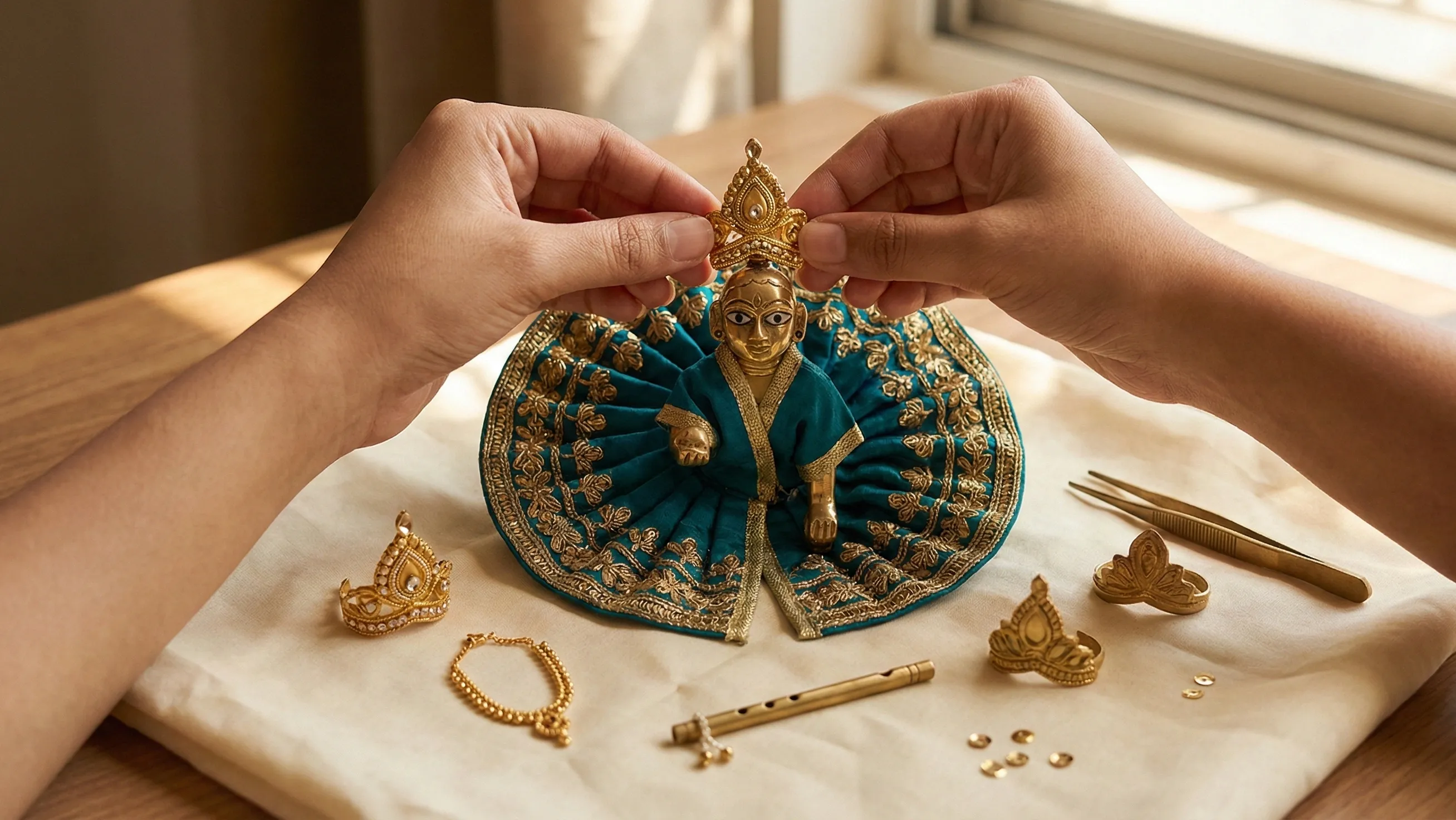
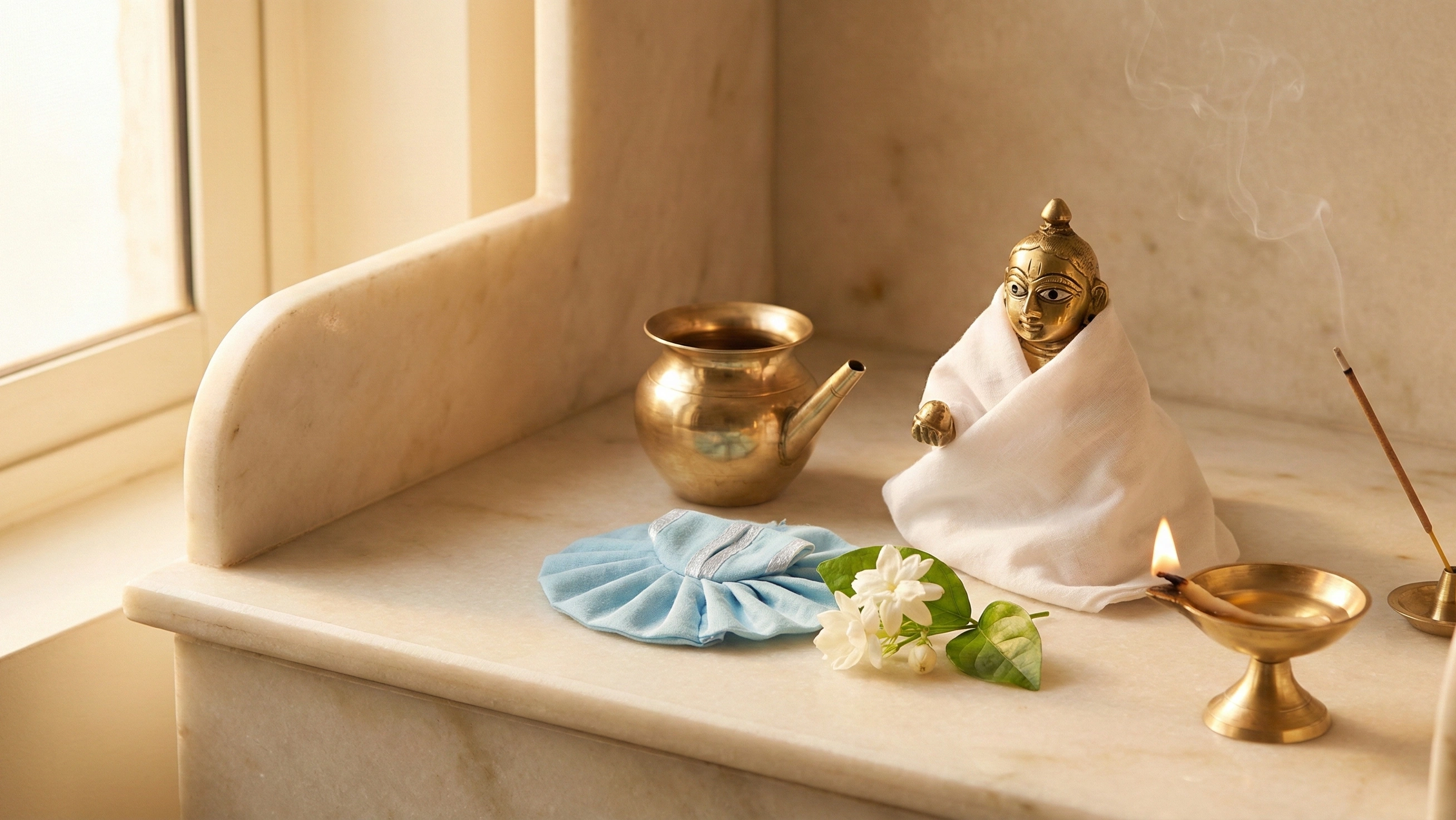
However beautiful the poshak, the way it is placed matters as much as the fabric itself. Before you begin dressing Thakurji, wash your hands — this is both a hygienic practice and a gesture of respect that every tradition of temple seva upholds. Let your hands dry completely, because moisture from the fingers can leave faint marks on silk and velvet over time. When lifting the poshak from its storage, do not pull at a single point — support the whole piece, smoothing any folds gently before bringing it close to the idol. Dress Kanha Ji from the base upward, securing each fold before moving higher. Once the poshak is in place, the marigold mala (garland) goes last, completing the shringar like the final brushstroke of a painting. This sequence — hands washed, folds smoothed, mala last — takes perhaps three extra minutes and makes every piece of fabric last significantly longer.
Tip: Keep a dedicated small tray beside your mandir (home temple) for dressing: a clean cotton square to set the idol on while dressing, a soft brush to smooth out creases, and a single fresh flower or mala ready for the final placement. This small preparation transforms a rushed morning into a proper ritual.
Building Your Wardrobe Over Time
A devotee's poshak collection rarely arrives all at once — and it should not need to. The loveliest collections I have seen in homes are the ones that grew slowly, each piece chosen with real care, each one carrying a memory of the occasion it was bought for. If you are just beginning, resist the urge to buy many pieces at once. A small, thoughtfully chosen set of four to six poshak — one for summer, one for winter, one for festivals, and two or three for weekday rotation — will serve you beautifully for years. As you spend more time in daily seva, you will naturally begin to notice what is missing: perhaps a good monsoon-green cotton piece, or a proper saffron poshak for Sunday mornings. Let those gaps fill themselves naturally, as you encounter a fabric or a design that speaks to you.
- Begin with essentials: one cotton summer set, one velvet or brocade winter set, one festival silk
- Add weekday rotation pieces in cotton or chanderi — these see the most wear and are easiest to care for
- Watch for gaps in your colour range before buying duplicates in colours you already have
- Festival-specific pieces — a deep blue for Janmashtami, a saffron set for Diwali — can be added one celebration at a time
Letting the Ritual Carry You
There is a beautiful quality to any practice that you do every single day — it stops being an effort and becomes simply part of who you are. The morning dressing of Kanha Ji, when it becomes a true daily ritual rather than a hurried chore, begins to shape the morning itself. You slow down. You notice the quality of the light coming into the room. You feel the texture of the fabric between your fingers. These small moments of attentiveness are, in their own quiet way, a form of prayer. At Gopalji Fashion, every poshak we make is stitched with the understanding that it will one day become part of exactly this kind of morning in someone's home. Whether you come to us for a festival showpiece or a simple weekday cotton set, we hope each piece serves that daily ritual with dignity and grace.
Tip: If you ever feel that your daily shringar has become mechanical or rushed, try changing just one thing — a new colour for the day, a different folding style for the mala. Small variation reawakens attention, and attention is the heart of seva.
Tags