Every devotee who has stood before a shelf of poshak, whether in a physical shop in Mathura or scrolling through an online catalogue late at night, has felt the same quiet confusion. There is so much that is beautiful. There is so much that seems right. How do you choose? In my years of making poshak and dressing my own Laddu Gopal at home, I have come to understand that good poshak selection is not about finding the most expensive piece or the most elaborately embroidered one. It is about reading three things clearly: the occasion you are dressing for, the aesthetic you are building around your singhasan (throne), and the way the accessories will work together as a complete shringar. When those three things are aligned, even a simple cotton poshak can look like a masterpiece.
Start With the Occasion: Daily Seva Versus Festival Shringar
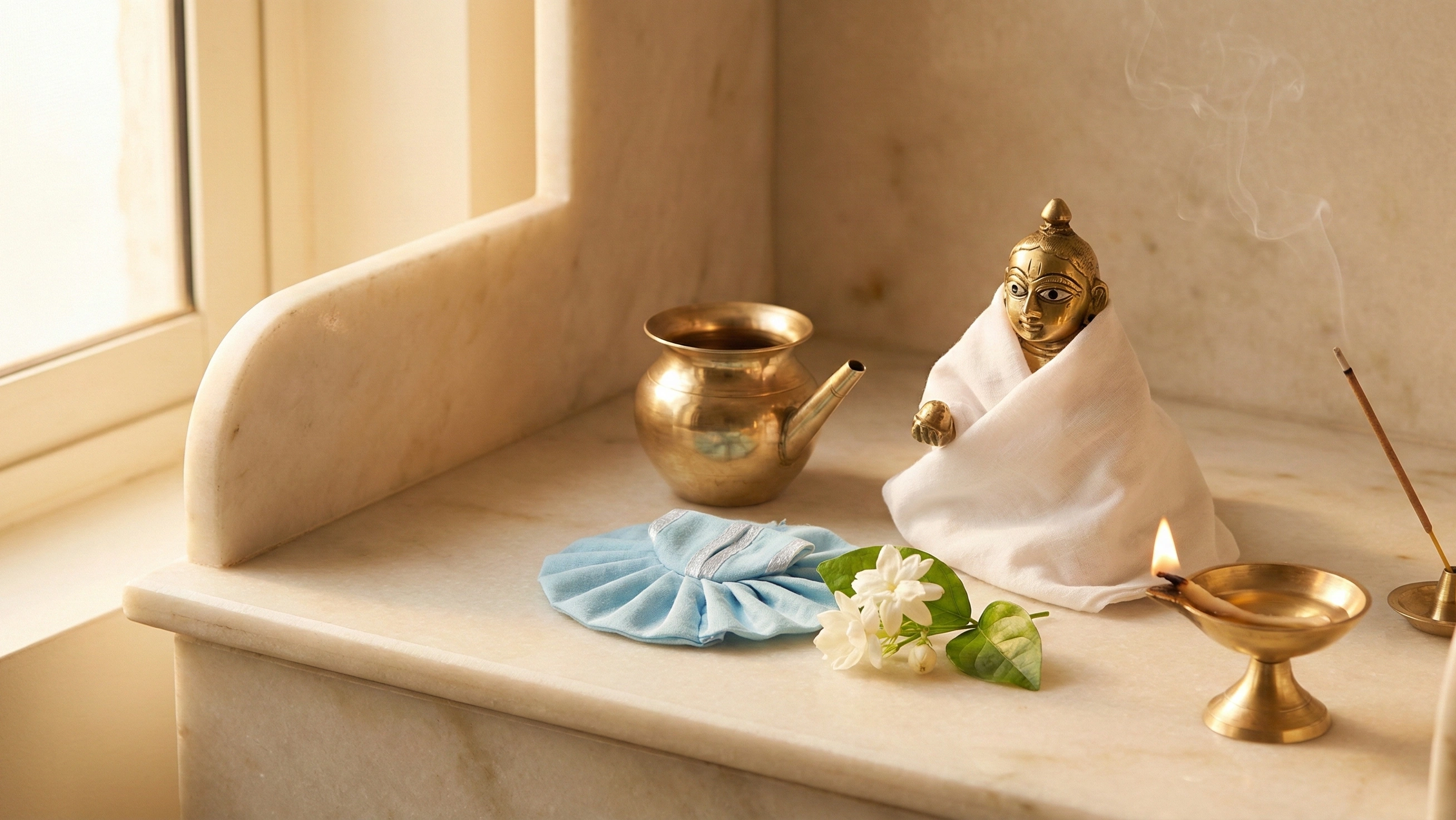
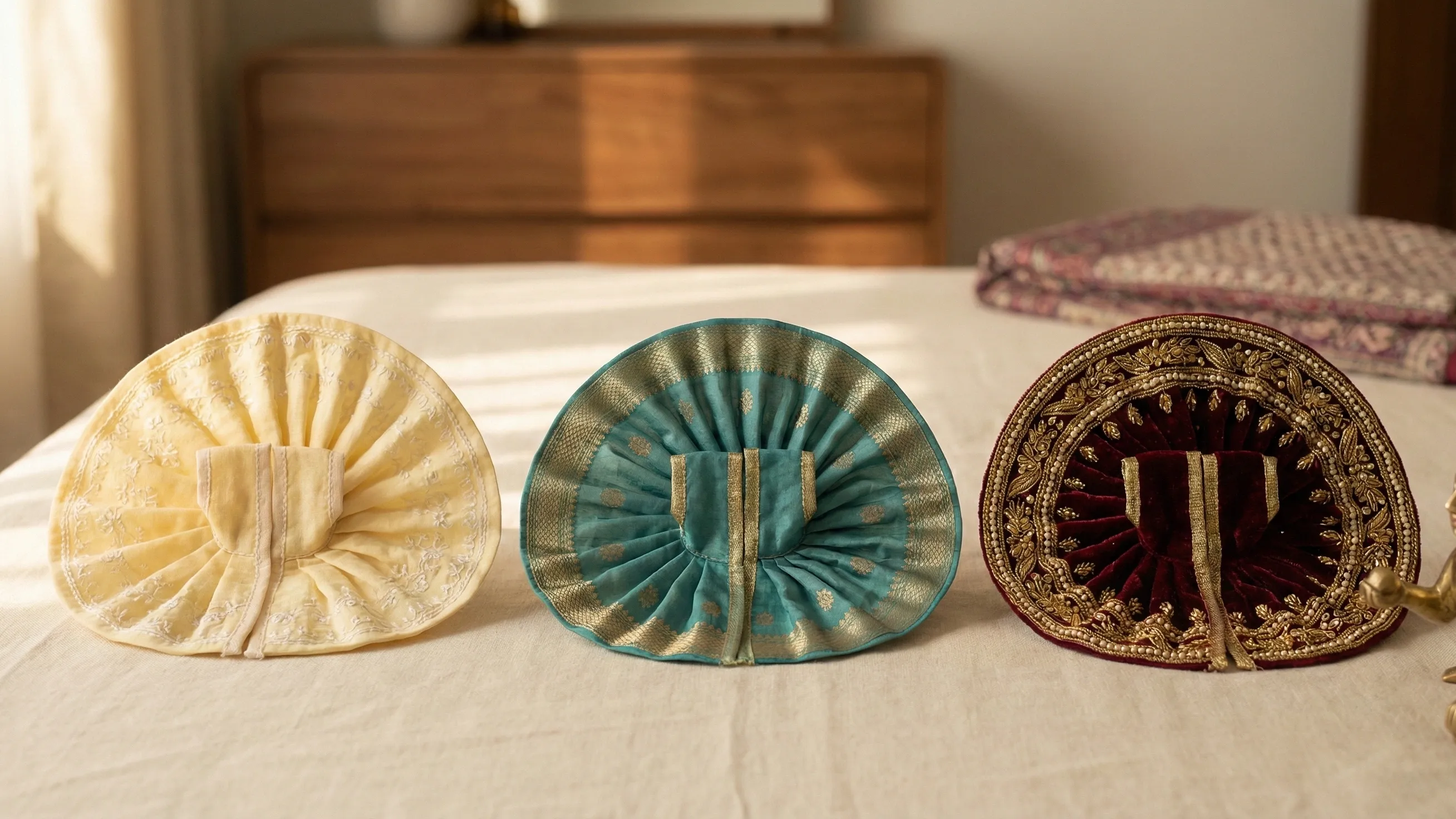
The single most useful distinction in any poshak collection is the one between daily wear and festival wear. These two categories serve entirely different purposes and deserve entirely different fabrics. For daily seva, the gentle, loving routine of morning and evening shringar that devotees maintain through ordinary days, cotton and light printed fabrics are the natural choice. They are soft on the idol, simple to put on and remove, easy to wash when needed, and modest in weight. They do not ask anything dramatic of the devotee. Festival poshak, on the other hand, is where you bring out the silk, velvet, and brocade. These heavier, richer fabrics honour the elevated spirit of a festival day. They carry embroidery, zari (metallic woven borders), and stone work gracefully. They photograph beautifully under aarti light. The wisest approach is to build both categories in your collection rather than spending everything on one grand festival piece and having nothing comfortable for daily use.
- Daily wear: soft cotton, mulmul, or light printed fabric, easy to manage and gentle on the idol
- Festival wear: pure silk, Banarasi silk, or velvet, rich texture, embroidery-ready, appropriate for elevated occasions
- Monsoon and summer months: chanderi silk or fine cotton are ideal, breathable and comfortable for Kanha Ji
- Winter months: velvet holds warmth and carries heavy embroidery beautifully. Diwali through February is velvet season.
- Mid-tier occasions (Ekadashi, Pradosh, monthly celebrations): brocade or satin offer a step up from daily wear without the full weight of festival velvet
Tip: If you are building a poshak collection from scratch, start with one good cotton piece for daily use and one quality silk piece for festivals. From that foundation, every addition becomes easier to contextualise.
Understand Your Aesthetic Vision Before You Browse
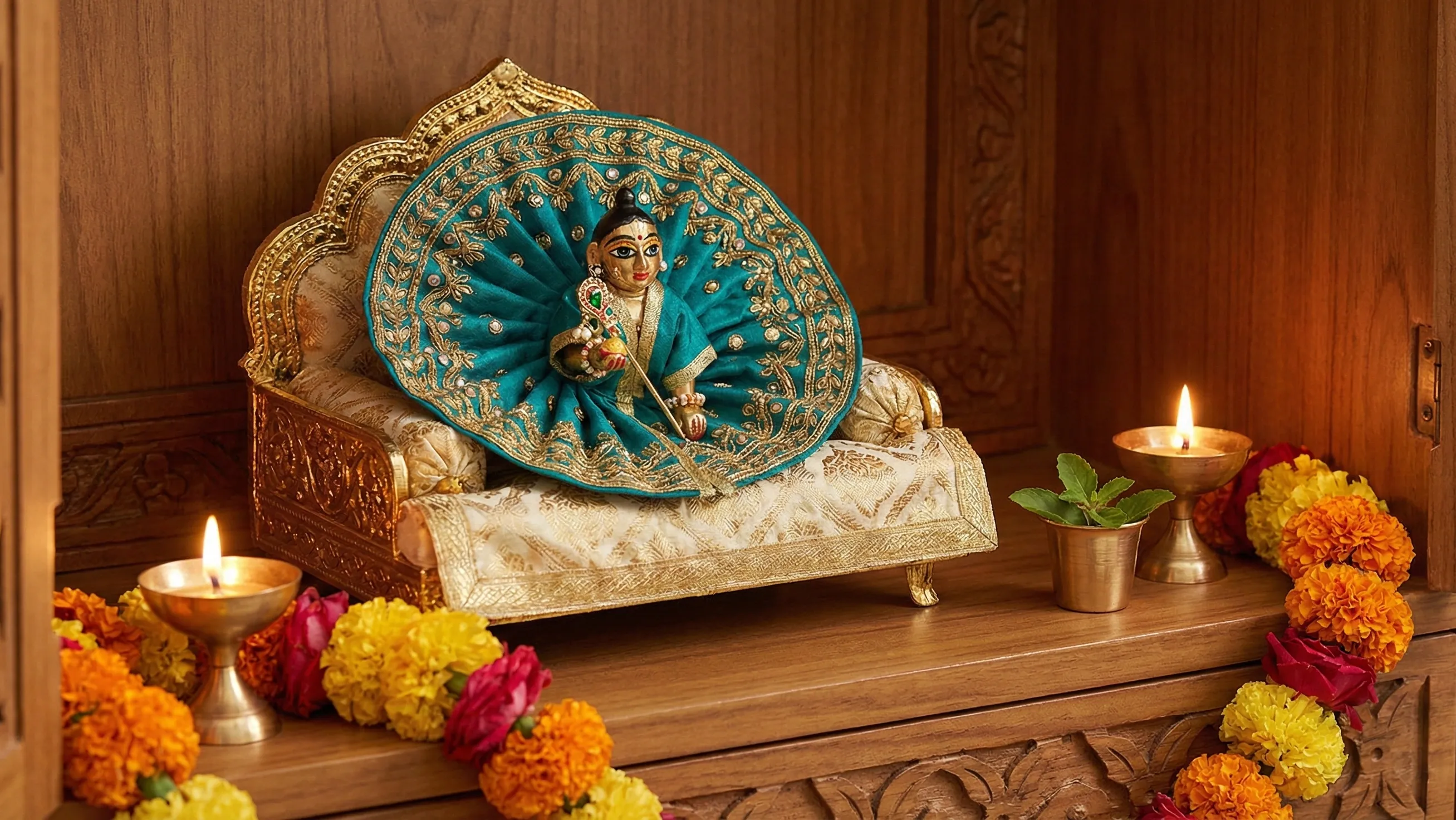
Before you open a catalogue or walk into a shop, spend a quiet moment thinking about the visual world you have already created around your Thakurji's singhasan. What colours appear on the backdrop cloth? What is the tone of the mandir space itself, warm and golden, or cool and serene? Poshak choices that align with an existing aesthetic vision always look more intentional and more beautiful than choices made in isolation. If your mandir space has a warm, earthy quality, sandalwood tones, terracotta lamps, marigold rangoli, then traditional jewel-toned poshak in deep ruby, emerald, or saffron will feel native to that environment. If your space tends toward the cooler and more contemporary, peacock-inspired teals and blues work beautifully, especially in silk. Devotees who love regional Indian textile traditions often draw from leheriya (the wave-dyed Rajasthani fabric), bandhani (tie-dye work from Gujarat and Rajasthan), or Chanderi weaves. Each of these carries a cultural depth that adds meaning to the shringar beyond mere colour.
- Traditional aesthetic: deep jewel tones such as royal blue, ruby, emerald and saffron, in silk or velvet with zari borders
- Peacock-inspired theme: teal and turquoise with gold, echoing Kanha Ji's own morpankh (peacock feather) crown
- Regional textile aesthetic: leheriya, bandhani, or Chanderi weaves for devotees who love India's regional craft traditions
- Minimalist aesthetic: plain or lightly bordered fabrics in cream, ivory, or pale gold, letting the idol's form and a single good accessory take centre stage
- Seasonal palette: think of nature, since the colours of the season outside often translate beautifully into festival poshak choices
Think of Accessories as a System, Not as Add-Ons
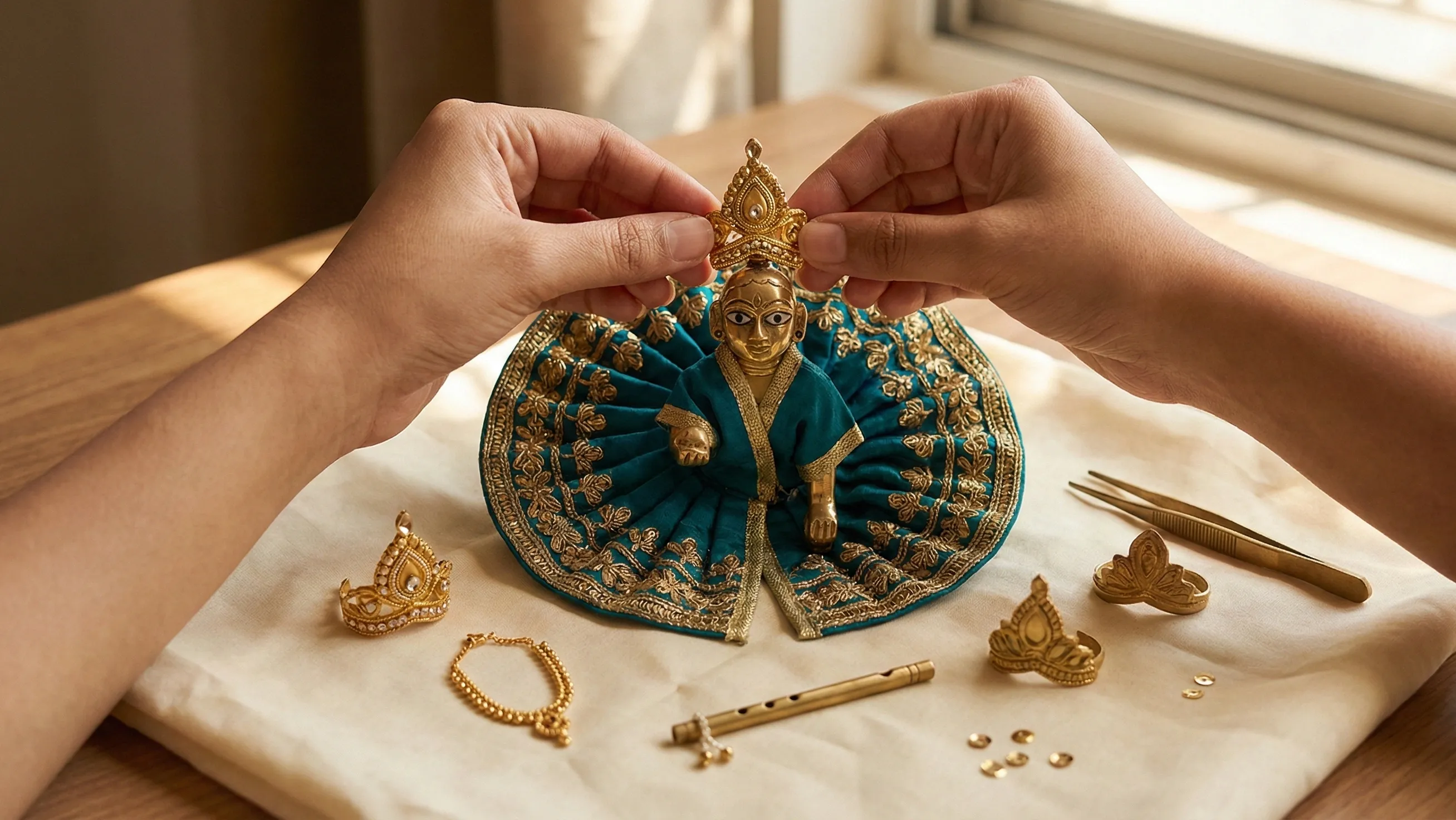
The most common mistake I see even experienced devotees make is treating accessories as an afterthought. They choose the poshak first, then hunt for a mukut (crown) and mala (garland) that more or less match it. The result is a shringar that looks assembled rather than composed. A far better approach is to think of the poshak and its accessories as a single integrated system from the beginning. The mukut determines the vertical emphasis of the shringar. A tall, elaborate Vrindavani mukut in peacock feather style reads very differently from a small, intimate floral crown. The mala anchors the chest; a heavy kanthi mala (beaded necklace) brings the eye down, while a fresh flower haar (garland) keeps the attention airy and upward. The bansuri (flute) is Kanha Ji's most personal attribute. It should always be offered in the hand as part of any shringar that aspires to completeness. Kangana (wrist ornaments) and payal (ankle bells) are finishing details that carry a quiet, joyful sound in daily puja, and their presence lifts even a simple outfit into something sacred.
- Mukut (crown): the most visible accessory. Match height and style to the occasion; a grand festival mukut on a daily cotton poshak looks mismatched.
- Mala or haar (garland or necklace): choose between fresh flowers for living softness or beaded metal kanthi for permanence. Both are correct, depending on occasion.
- Bansuri (flute): always include this in Kanha Ji's hands as his essential personal attribute
- Kangana and payal (wrist and ankle ornaments): small details that add dimension and a devotional quality to the full shringar
- Pitambar (yellow waist cloth or dhoti): a contrasting yellow or gold dhoti under the main poshak adds layering and traditional depth
Tip: When choosing accessories for a heavily embroidered festival poshak, keep the mukut and mala relatively simple. The embroidery is already carrying the visual weight, and restrained accessories let it breathe and be seen properly.
Let the Singhasan Be Your Canvas
The singhasan (throne) your Thakurji sits upon is not just a piece of furniture. It is the backdrop against which every poshak is seen. A dark wood singhasan makes jewel-toned poshak glow but can swallow very dark velvet pieces. A white or gold singhasan lifts almost any colour but is particularly complementary to rich primary tones. If your singhasan has a detailed pattern or a strong colour of its own, simpler poshak with clean lines and modest embroidery tend to work better than heavily ornate ones, which can create visual competition rather than visual harmony. Think of the singhasan as the canvas and the poshak, accessories, and surrounding decor elements as the composition painted upon it. At Gopalji Fashion, when customers share photographs of their mandir space along with their poshak enquiry, it genuinely helps our artisans suggest the right colour and embroidery weight for the specific setting.
How to Verify Quality When Shopping Online
Most poshak purchasing today happens online, and that comes with a particular challenge: you cannot feel the fabric, assess the embroidery quality, or see the true colour before the package arrives. A few careful habits will protect you from disappointment. Always look for sellers who provide multiple photographs, not just a styled product shot but close-up images of the embroidery, the reverse of the fabric, and ideally a photograph of the poshak on an actual idol rather than flat. Ask directly about the fabric composition. Pure silk, pure velvet, and pure cotton should be stated explicitly; vague descriptions like "silky fabric" or "velvet-type material" are warning signs. Verified buyer reviews with photographs are more reliable than any product description. If a seller has a WhatsApp number, it is always worth sending a quick message to ask your specific questions. A genuine artisan will always be happy to help you choose the right piece rather than simply close a sale.
- Look for multiple product photographs including close-ups of embroidery and fabric reverse
- Ask explicitly about fabric composition. Pure silk, pure cotton, pure velvet should be stated, not implied.
- Check for photographs of the poshak on an actual idol, not just a flat lay
- Read verified buyer reviews with photographs rather than relying on rating numbers alone
- Confirm the return or exchange policy before ordering, especially for festival-grade pieces
Tip: If you are shopping online and the price of a piece described as pure silk seems too good to be true, it almost certainly is. Genuine silk has a natural lustre and weight that cannot be replicated cheaply. If the cost is very low, ask about the fabric honestly before ordering.
Tags