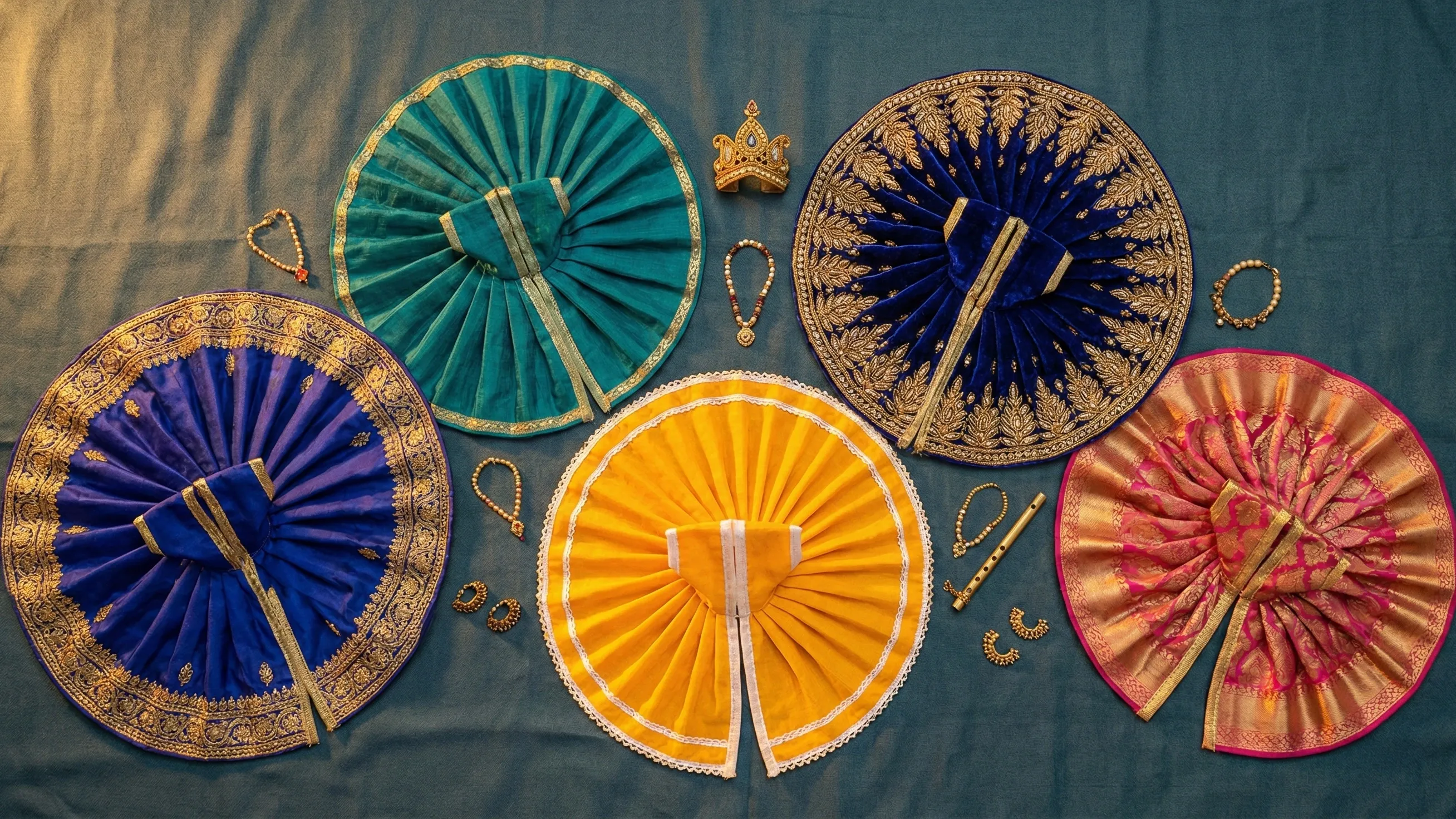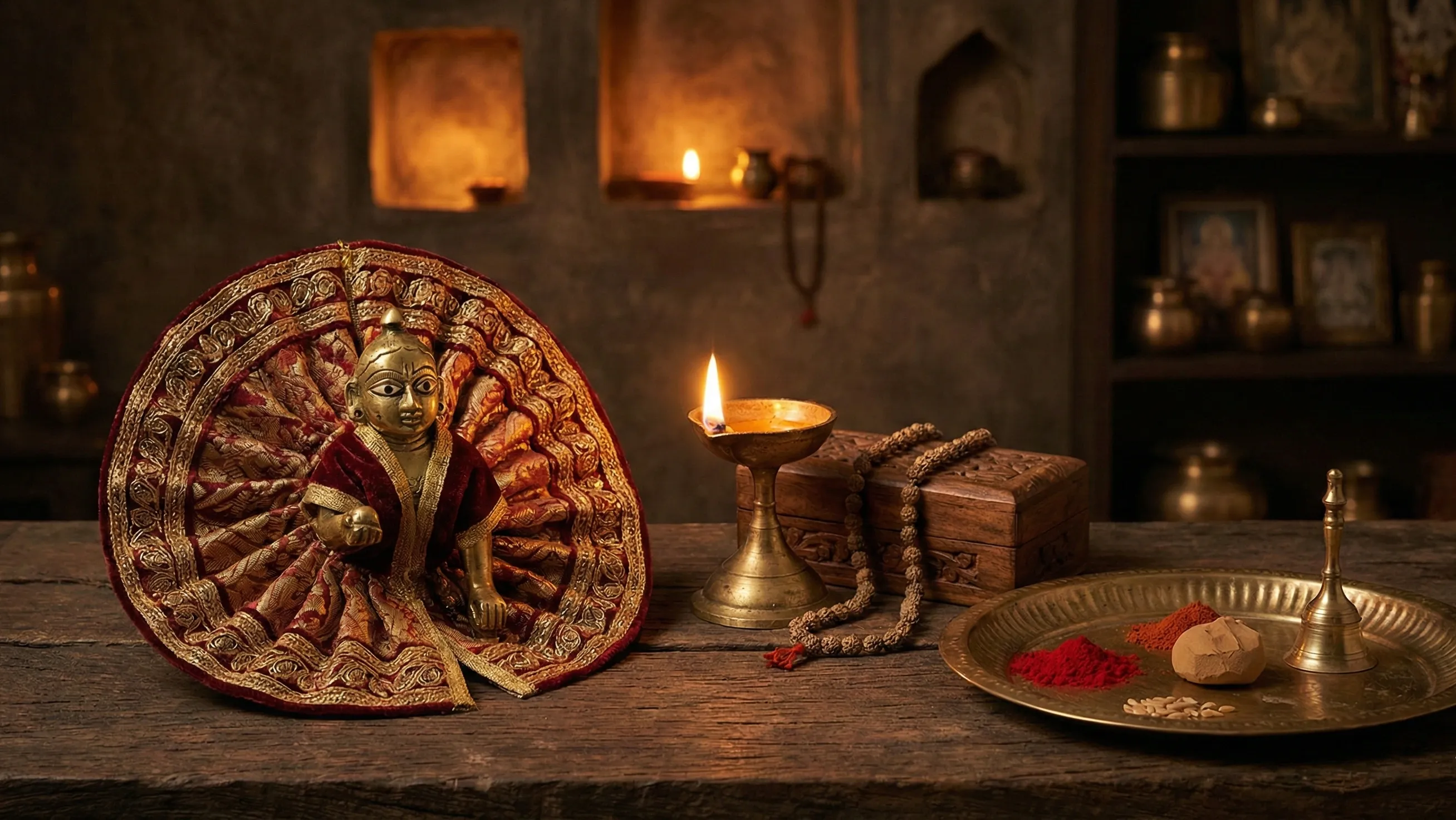
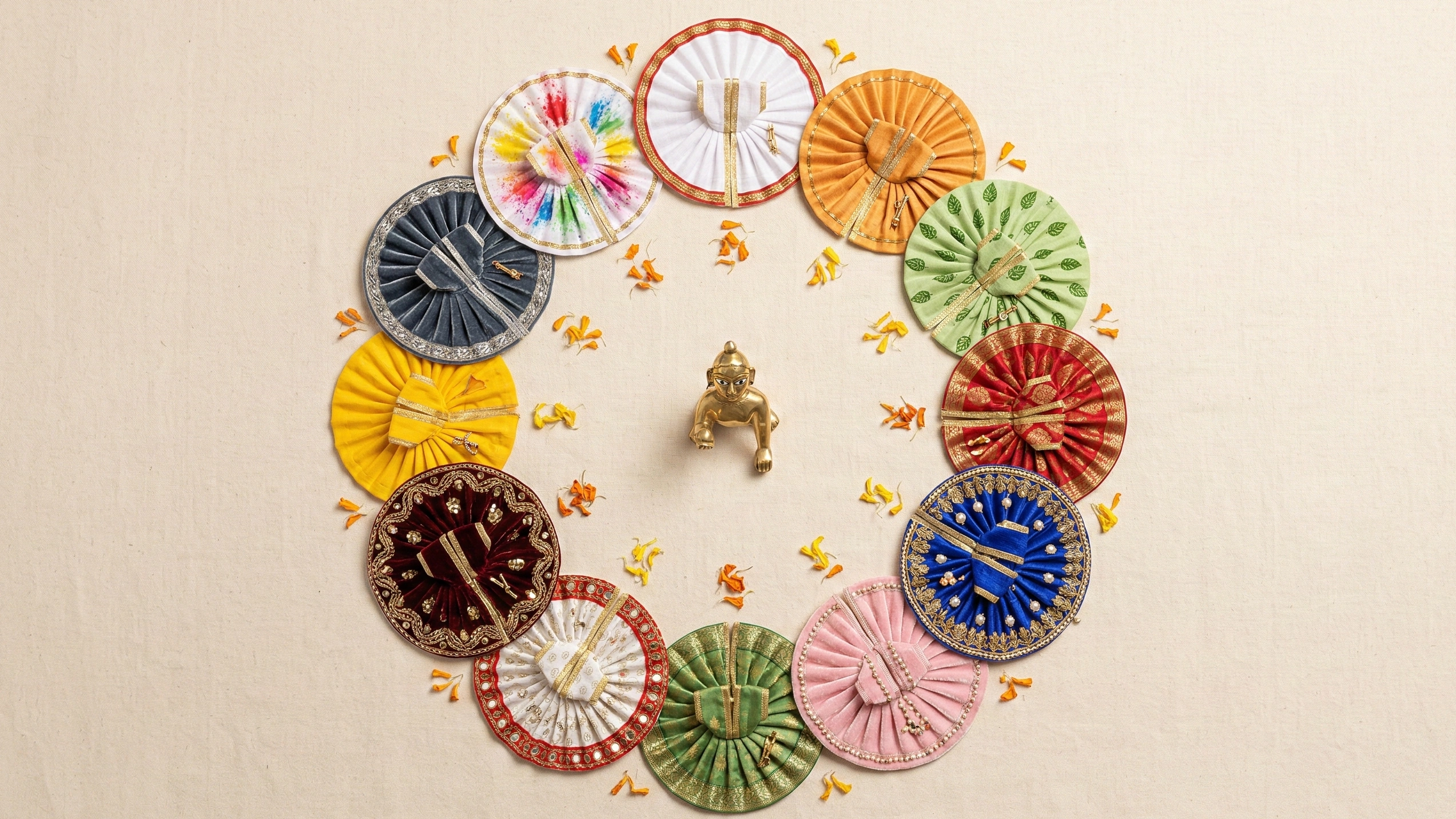
One of the most beautiful aspects of Laddu Gopal seva is dressing your Thakurji according to the rhythm of the festival calendar. Each Hindu festival carries its own traditional colour, its own sacred meaning, and its own recommended fabric. When you honour these traditions in your poshak choices, the shrine comes alive in a way that feels deeply connected to something much larger than any one household. Planning a full year's wardrobe for Kanha Ji can feel overwhelming at first, but once you see the year as four distinct seasons of devotion, everything falls into place naturally. This guide walks you through the year season by season, so you always know what to dress your Laddu Gopal in and why.
Spring: Basant and the Season of Yellow
Spring is a gentle, joyful season for Laddu Gopal's wardrobe. The colours shift from the dark, somber tones of winter toward bright, hopeful shades that mirror the blooming world outside. Basant Panchami, which falls in January or February, is the most important festival of this season. Yellow is not just traditional but essentially mandatory. Yellow (peela) represents Saraswati's blessings, the ripening mustard fields, and the warmth of the sun returning after winter. Holi in March opens the door to multi-coloured and playful white poshak. Ram Navami in April calls for the sacred saffron and golden palette of divine kingship. For spring, lightweight chanderi and pure cotton are the ideal fabrics. They breathe well as the weather warms and drape beautifully in soft, fluid colours.
- Basant Panchami: yellow, cotton or chanderi
- Holi: white or multi-colour, easy-care cotton
- Ram Navami: saffron and gold, silk or brocade
Tip: Yellow holds special meaning in Vaishnav tradition. It is Vishnu's colour and is said to represent prosperity and divine grace. A bright mustard-yellow poshak for Basant Panchami is one of the simplest and most devotionally significant choices you can make.
Summer and Monsoon: Light Fabrics, Cool Pastels
The months from May through July demand practical wisdom in your poshak choices. Your Laddu Gopal feels the warmth too, and the tradition of using breathable, cooling fabrics in summer is both spiritually thoughtful and practically sound. Pale pastels such as soft mint green, light blue and creamy ivory are favoured during these months. The monsoon brings the deeply beloved Jhulan Yatra (the swing festival), celebrated across ten or twelve days in the Shravan month. This is a season of playfulness and romance between Radha and Krishna, and the poshak should reflect that lightness. Pastel greens and blues on georgette or chanderi, often with delicate floral embroidery or simple lace borders, are the natural choice. Cotton and georgette are your essential fabrics for this entire stretch of the year.
- Summer months (May to June): cool pastels and ivory, cotton
- Jhulan Yatra (Shravan): pastel green or sky blue, chanderi or georgette
- Guru Purnima: white or cream, pure cotton or mul
The Grand Festival Season: Janmashtami to Diwali
This is the heart of the devotional year, stretching from August through November, and this is where your finest poshak belong. Janmashtami, Lord Krishna's own birthday, is the centrepiece. Royal blue is the colour most deeply associated with Kanha Ji himself, representing the infinite sky, the deep ocean, and the boundless nature of the divine. But any colour that feels most precious to you is welcome on this day. Immediately after, Radha Ashtami calls for soft pink and gold. Then Navratri brings nine consecutive nights, each with its own prescribed colour, a wonderful way to use your full collection. Dussehra marks the victory of dharma in red and gold, Sharad Purnima calls for moonlit white and silver, and Diwali closes this season with your most embellished, most glittering poshak: mirror work, sequins, zardozi, the works. At Gopalji Fashion, our velvet and silk collections are designed with precisely this grand season in mind.
- Janmashtami: royal blue or any sacred colour, silk, velvet, or heavy zari brocade
- Radha Ashtami: pink and gold, silk or satin
- Navratri: nine rotating colours, varied (cotton to silk)
- Sharad Purnima: white and silver, satin or silk
- Diwali: rich jewel tones, velvet with embellishment
Tip: Blue for Janmashtami is not just tradition. It carries deep meaning. Krishna is described as Megha Shyam, the one whose complexion resembles a rain-bearing cloud. Dressing your Thakurji in deep blue on his birthday is a way of honouring exactly who he is.
Winter: Warmth, Velvet and the Closing of the Year
As the year winds down from November through February, the wardrobe shifts toward warmth and richness. Velvet is the undisputed fabric of this season. Its plush pile creates genuine warmth and makes deep jewel tones like maroon, emerald green, and royal purple look extraordinary. Govardhan Puja calls for earthy greens to honour the sacred hill that Kanha Ji lifted. Dev Uthani Ekadashi, which marks the end of Chaturmas, is a festive occasion where bright, celebratory poshak are appropriate. Through December and into January, warm velvet pieces keep Laddu Gopal comfortable through the coldest nights. Makar Sankranti, which opens the new year's festival cycle, traditionally uses dark blue and black, a grounding, dignified palette to mark the sun's northward journey.
- Govardhan Puja: green and earthy tones, cotton or chanderi
- Dev Uthani Ekadashi: bright and festive, silk or brocade
- December to January (daily): deep maroon, emerald, purple, velvet
- Makar Sankranti: dark blue or black, velvet or brocade
Building Your Festival Wardrobe Over Time
The ideal festival wardrobe does not need to be assembled all at once. A small, well-chosen starting collection can cover most of the year beautifully, and you add to it gradually with each passing festival season. A sensible foundation includes one fine Janmashtami poshak (silk or velvet in blue or gold), one spring yellow or saffron poshak, two light cotton pieces for summer and monsoon rotation, one velvet piece for winter, and one all-purpose white or cream poshak for Sharad Purnima and quiet, contemplative days. From there, let your heart guide what to add each year. Many devotees find that gifting a new poshak at each major festival becomes its own cherished ritual. The collection grows slowly, each piece carrying the memory of a particular celebration. At Gopalji Fashion, we are happy to help you plan this journey, whether you are starting your very first collection or expanding a wardrobe you have been building for years.
Tags