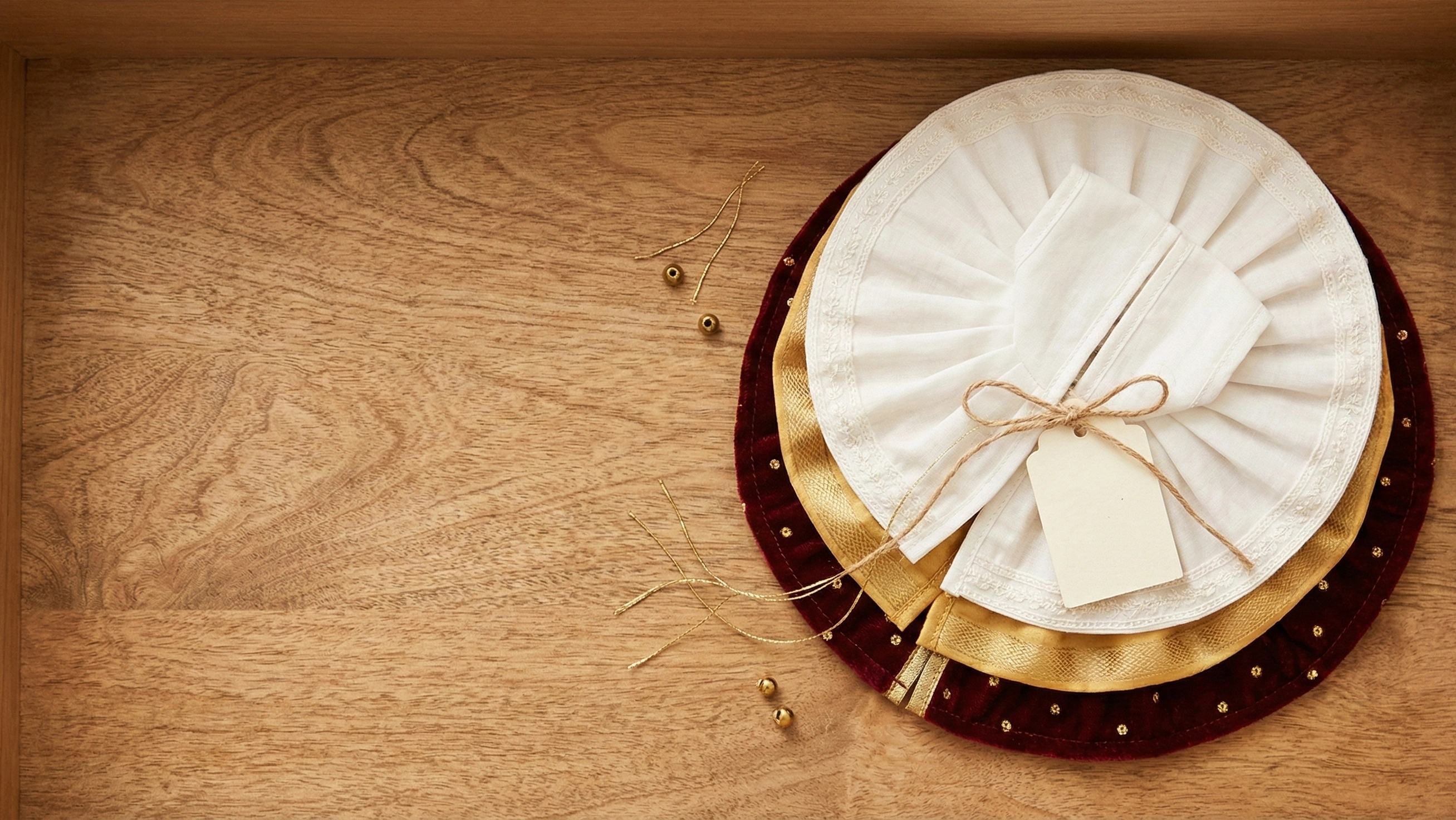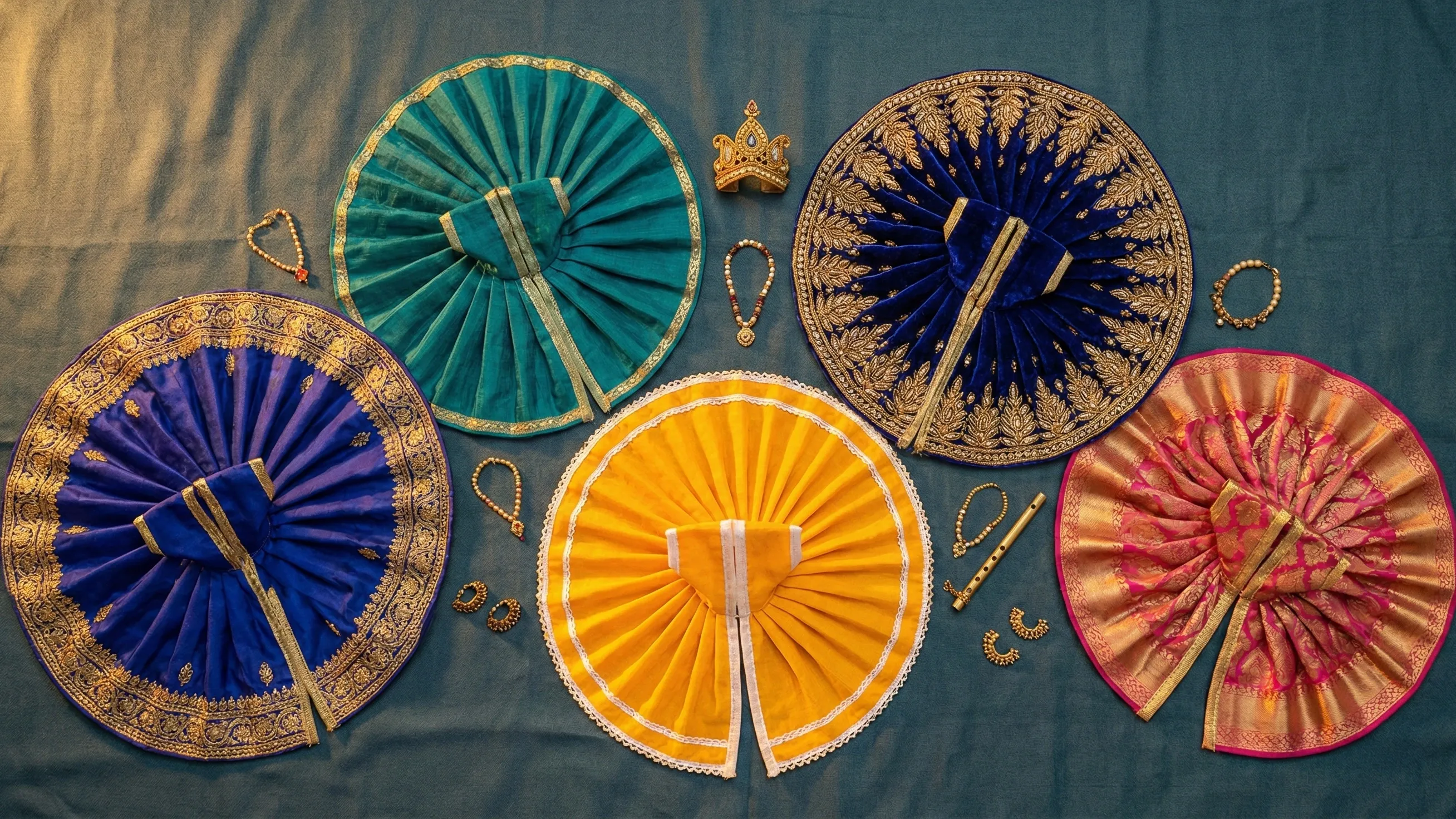
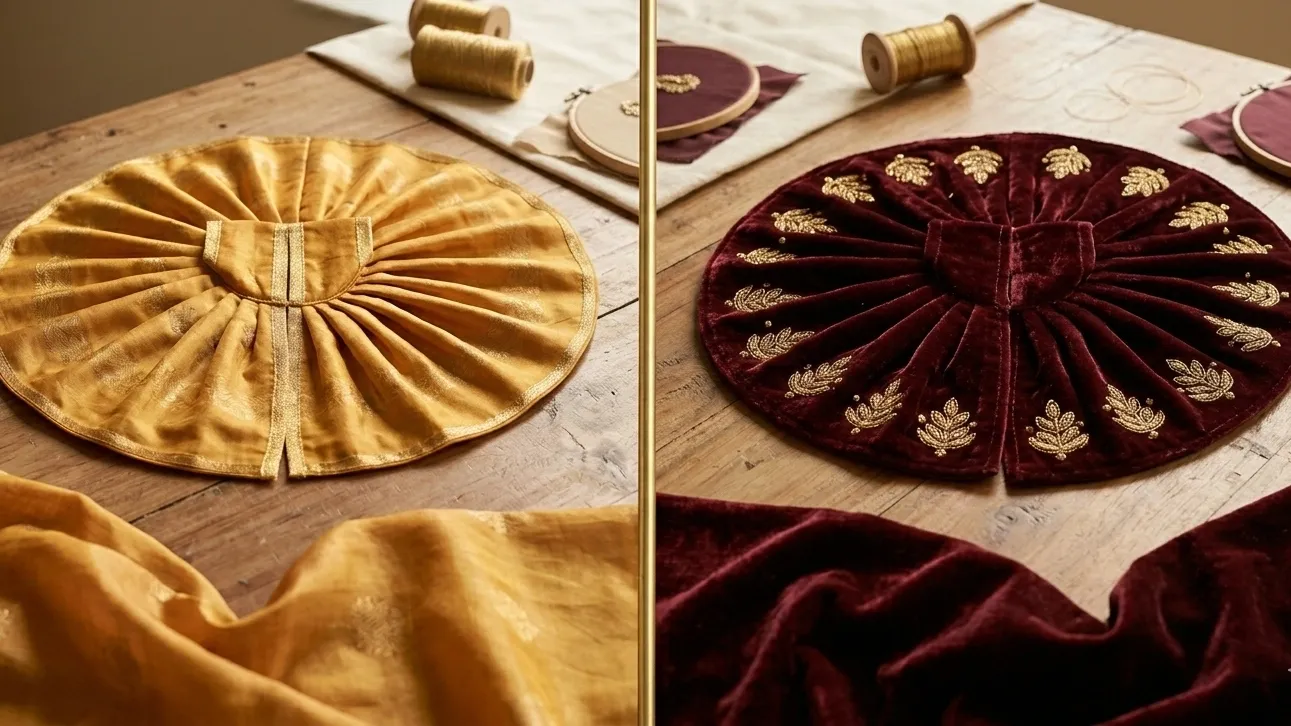
When it comes to dressing your Laddu Gopal in a premium poshak, the question devotees ask most often is this: silk or velvet? Both fabrics have deep roots in temple tradition, both look beautiful in the mandir, and both carry a sense of reverence that everyday materials simply cannot match. But they are not interchangeable. Silk and velvet each have a distinct character, a season where they truly shine, and a type of occasion where they are the natural choice. Once you understand those differences, you will not just be buying a poshak. You will be building a wardrobe for your Thakurji.
Silk: The All-Season Classic
Silk is the most versatile fabric in any Laddu Gopal poshak collection. It is lightweight, naturally breathable, and carries a subtle lustre that catches the light of a diya or a lamp without looking garish. Pure silk (also called Katan silk) has a smooth, close weave and a gentle sheen that photographs beautifully. Banarasi silk, woven in Varanasi with its characteristic zari brocade border, is the choice for Janmashtami, Annakut, and any occasion that calls for opulence. Chanderi silk is finer and more translucent, ideal for summer months when even your Kanha Ji deserves something airy and cool. All three drape gracefully, creating the clean, flowing lines that make a poshak look well-fitted and dignified.
- Pure silk (Katan): everyday premium wear, smooth texture, gentle natural sheen
- Banarasi silk: festival-grade, rich zari borders, ideal for Janmashtami and Diwali
- Chanderi silk: sheer and fine, best for summer and Jhulan Yatra
- Works well across spring, summer, and monsoon seasons
- Drapes cleanly, showing good fit even on smaller idol sizes
Tip: Silk poshak look especially beautiful when the fabric has a slight stiffness to it. If your silk piece feels limp, a very light starch press (not touching embroidery) can restore its shape.
Velvet: King of Winter and Festivals
There is nothing quite like a velvet poshak on your Thakurji during the winter months. The dense, plush pile of velvet absorbs and reflects light in a way that creates extraordinary depth of colour. A maroon velvet piece in the glow of a ghee diya looks like it belongs in a royal court. This is why velvet has always been associated with grand occasions. It is also the most embroidery-friendly fabric available. The thick pile holds the weight of zardozi (metallic threadwork), stone setting, and mirror work without puckering or shifting, which means the most elaborate poshak designs are almost always made on velvet. Deep jewel tones such as navy, emerald, ruby, and amethyst look their absolute finest in velvet, making it the go-to fabric for Diwali, Govardhan Puja, and the winter pooja season that runs from November through February.
- Unmatched warmth and heaviness, appropriate for the cold months
- Best base for zardozi, stone work, and heavy embroidery
- Jewel tones (maroon, emerald, navy, purple) look deepest on velvet
- Ideal for Diwali, Annakut, Govardhan Puja, and winter Ekadashi
Other Fabrics Worth Knowing
Silk and velvet may be the two mainstays, but a complete poshak wardrobe draws on a few other fabrics as well. Cotton is the unsung hero of daily seva. It is easy to wash, gentle on the idol, and completely appropriate for the simple, loving routine of everyday shringar. In the peak summer months of May and June, a soft cotton poshak is a practical act of care for Kanha Ji. Brocade (heavy woven fabric with raised patterns) is the choice for the grandest ceremonies. It has a stiffness and a richness that makes it almost sculptural on the idol. Satin brings shimmer and a mirror-like surface that works beautifully for Sharad Purnima and other moonlit celebrations. Each of these fabrics has its moment, and knowing when to use which one is what separates a thoughtful devotee from one who simply owns a lot of poshak.
- Cotton: daily wear, easy care, ideal for May-June summer heat
- Brocade: heavy occasions, weddings, annual puja, structured and grand
- Satin: shimmer festivals, Sharad Purnima, evening aarti settings
Seasonal Calendar and Care at a Glance
Knowing which fabric to reach for in each month makes shringar feel intentional rather than accidental. Here is a simple seasonal map alongside the key care rule for each fabric, since a poshak that is not cared for will not last the years it deserves to.
- March to June (spring and summer): chanderi silk, cotton. Hand wash in cold water, shade dry flat.
- July to September (monsoon and Janmashtami): pure silk, Banarasi silk. Press water out gently, never wring, store only when completely dry.
- October to November (festive autumn): Banarasi silk, satin, brocade. Spot clean only, wrap in butter paper to protect metallic threads.
- December to February (winter): velvet. Dry clean preferred, store with a neem sachet, never fold against the pile direction.
- Year-round: store all poshak in soft muslin cloth, away from moisture and direct sunlight.
Tip: During monsoon season, air out your stored poshak every three to four weeks. Trapped humidity is the fastest way to ruin embroidery and tarnish zari borders.
Building Your Starter Collection
If you are just beginning to build a poshak wardrobe for your Laddu Gopal, the temptation is to buy everything at once. A better approach is to start with a small, intentional collection and add to it as your seva deepens. A practical starter set would include three cotton or light silk poshak for daily rotation, two velvet pieces for winter festivals, one Banarasi silk for the biggest occasion of your year (Janmashtami being the most common), and one satin or brocade piece for special puja days. That is seven to eight poshak in total, enough to dress Thakurji appropriately through every season without repeating the same piece too often. At Gopalji Fashion, we design our poshak with exactly this kind of collection in mind, which is why our range spans fabrics, seasons, and occasions rather than focusing on a single style. Start small, choose thoughtfully, and your collection will grow into something truly beautiful over the years.
Tags