Many devotees spend considerable thought choosing the perfect poshak for their Laddu Gopal, yet the accessories are chosen quickly and almost as an afterthought. A beautiful silk poshak dressed with mismatched jewellery, an ill-fitting mukut and a bansuri that is half the length of Kanha Ji's arm will still look unsettled — because accessories are not decoration added on top of the shringar, they are the shringar itself. They tell a story: Thakurji as the divine king in his full royal regalia, or as the playful butter thief of Vrindavan with a peacock feather and a wooden flute. Understanding each category of accessory — headgear, jewellery, instruments and seating — and learning how each one relates to the others is what lifts a daily shringar from routine to reverent.
Headgear: Mukut and Pagdi
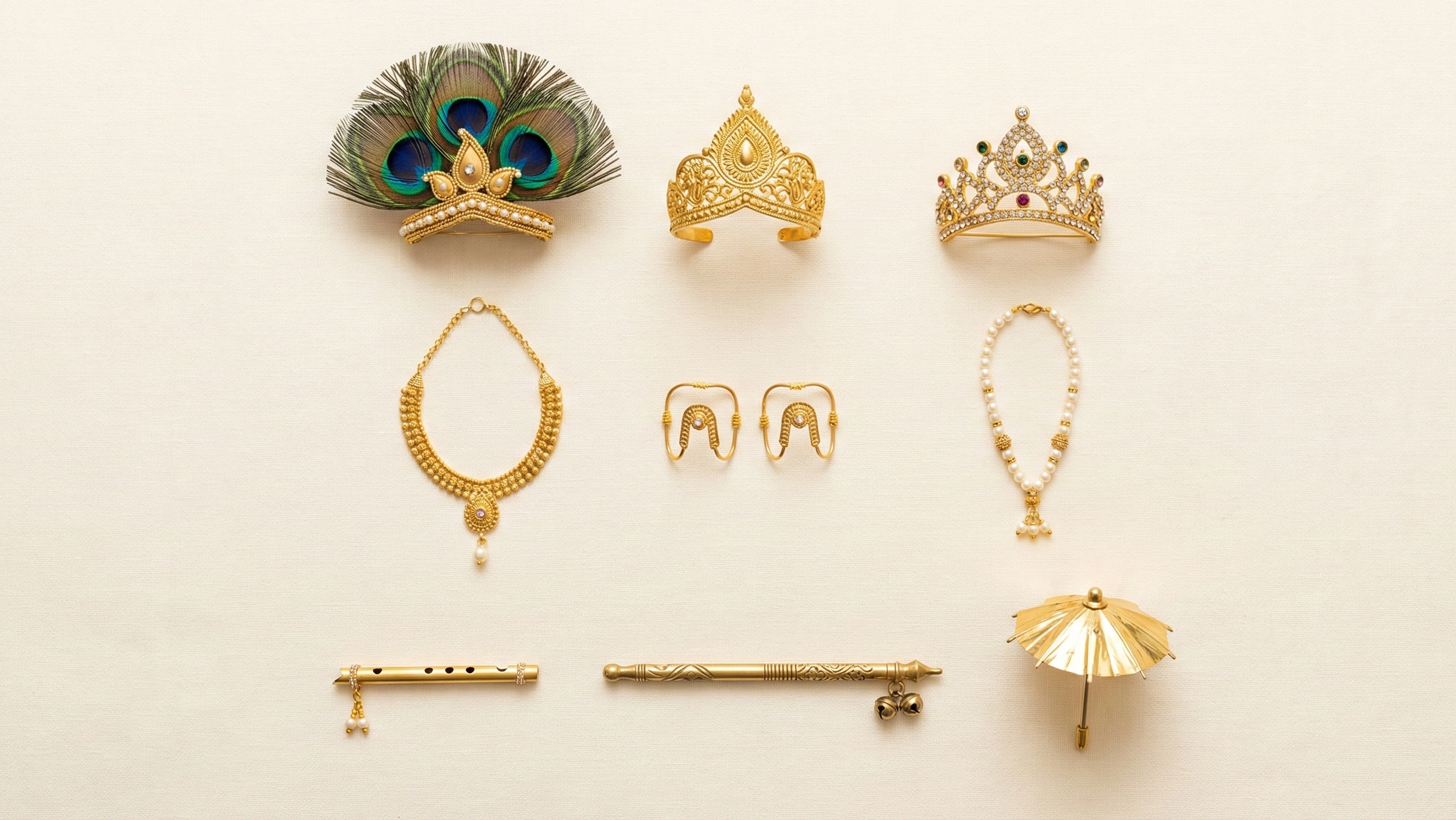
Headgear is the most visible single element in any Laddu Gopal shringar, which makes it the most important choice to get right. The two main forms are the mukut (crown) and the pagdi (turban), and they are not interchangeable in meaning. The mukut is the divine crown — formal, festive, and associated with Kanha Ji's role as the sovereign lord of Vrindavan. A jewelled mukut with a morpankh (peacock feather) insert is the traditional choice for Janmashtami, Annakut, and festival days when the full royal form of Thakurji is being honoured. The pagdi, by contrast, is more intimate — it belongs to the world of the gopas (cowherds) and the gardens of Vrindavan. A pagdi-patka set, where the pagdi (turban) is accompanied by a matching patka (sash or trailing fabric), creates a layered, graceful look and works beautifully for daily shringar, for Holi, and for the lighter poshak of the spring and summer months. A simple but important rule: when dressing Thakurji in a pagdi, do not place it over a jewelled mukut. The pagdi is the headgear on those days; the mukut rests.
- Jewelled mukut with morpankh insert: for Janmashtami, Annakut, Govardhan Puja and grand festival occasions
- Plain gold or silver-finish mukut: for weekly festivals, Ekadashi and elevated daily shringar
- Pagdi-patka set in matching fabric: for Holi, Jhulan, summer days and simpler daily shringar
- Dupatta-draped mukut: a jewelled mukut placed over a small dupatta (head veil) draped first — a particularly graceful combination for winter festival shringar
Tip: When placing a jewelled mukut, press it gently down from both sides simultaneously so it sits level. A mukut that tilts to one side is one of the most common beginner errors — step back and check from the front before finalising the look.
Jewellery: Vocabulary and Balance
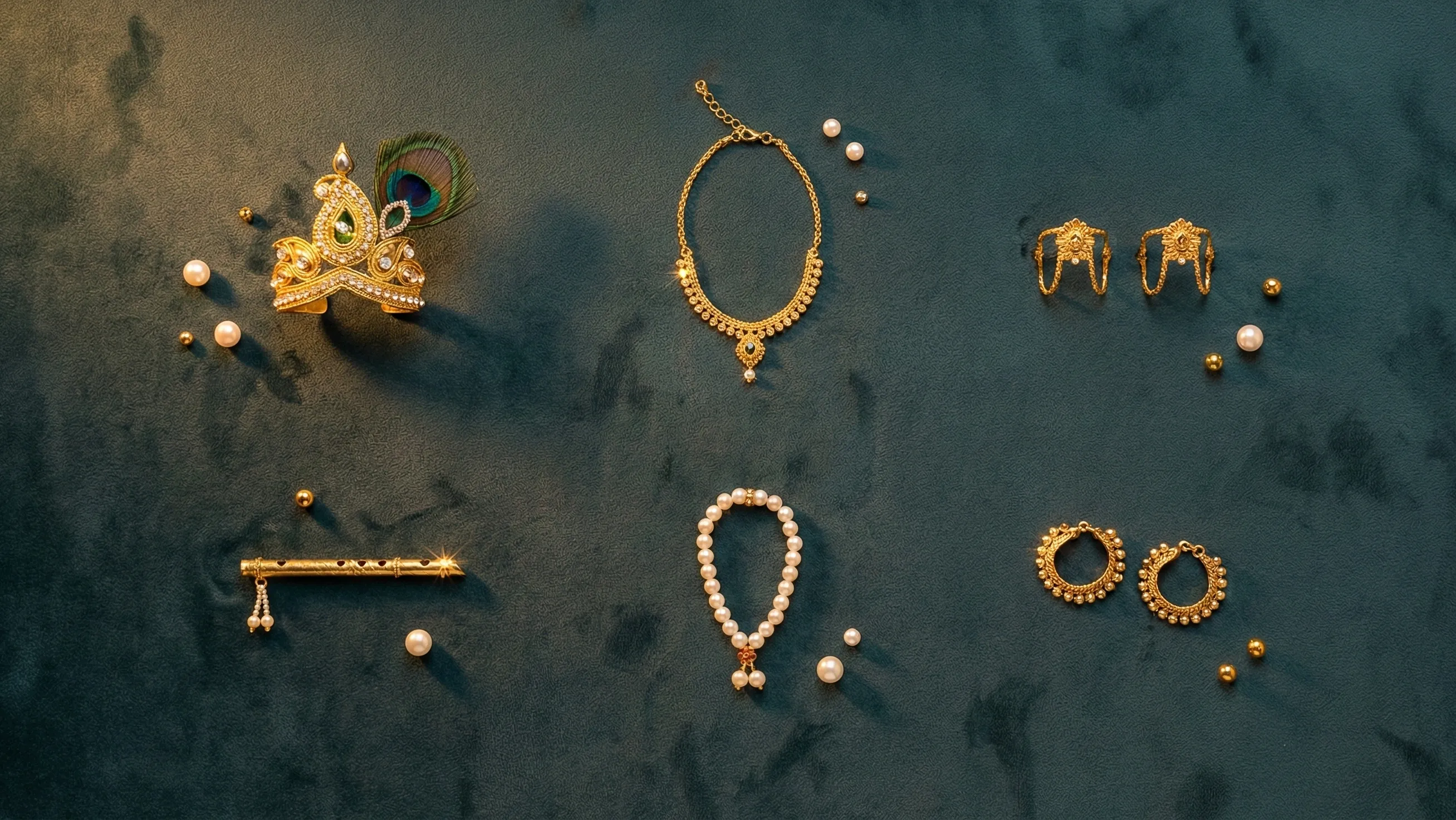
The jewellery vocabulary for Laddu Gopal shringar is richer than many devotees realise, and using the right terms helps enormously when shopping or placing a custom request. The mala (garland) sits at the centre of the jewellery look. Fresh flower mala — mogra, marigold, rose — are the most sattvic (pure) choice and are ideal for daily seva, but they need replacing every day. Tulsi mala (holy basil) is considered especially auspicious and many devotees keep a permanent tulsi mala on Thakurji at all times. Pearl or glass-bead mala are the decorative alternatives for festival days when fresh flowers are not available. Beyond the mala, the next most important pieces are the haar (choker necklace), bajuband (armlets worn on the upper arm), payal (anklets), and kundal (earrings). Each piece adds visual rhythm to the overall shringar, but the balance principle matters enormously: the total visual weight of the jewellery should complement the poshak, not compete with it.
- Mala: fresh flower for daily seva; tulsi for constant wear; pearl or glass-bead for festivals without fresh flowers available
- Haar (choker): sits at the base of the neck, adding warmth and richness to the neckline of any poshak
- Bajuband (armlets): worn on the upper arm, visible when Thakurji is in the standing or flute-playing posture
- Payal (anklets): delicate foot ornaments that add completeness to the look from base to crown
- Kundal (earrings): drop or hoop style, proportioned to the idol size — delicate for Size 1-3, slightly larger for Size 5 and above
Tip: Always maintain metal tone consistency across all jewellery pieces in a single shringar. Gold-finish mukut, gold-finish haar, gold-finish bajuband and gold-finish payal create a unified, intentional look. Mixing gold and silver tones in the same outfit rarely looks deliberate — unless the poshak itself has both metal tones in its embroidery.
The Bansuri: Choosing the Right Flute
The bansuri (flute) is perhaps the most personally meaningful accessory in all of Laddu Gopal shringar. It is the instrument inseparably associated with Lord Krishna — in scripture, in song, and in the devotional imagination of millions of bhaktas (devotees). Choosing the right bansuri is therefore not a decorative afterthought but an act of care. Bansuri come in three main materials: plain turned wood, stone-set wood (with coloured stone or bead inlay along the body), and crystal or acrylic. Plain wood has a natural, understated quality that works for everyday shringar; it is humble in the way that a shepherd boy's flute would be. Stone-set bansuri with coloured inlay look beautiful on festival days when the rest of the shringar is also elevated. Crystal bansuri have a particular brilliance under lamp light and are a popular choice for Janmashtami midnight aarti. The most important practical consideration, however, is length. A bansuri that is far too long will look ungainly and will not stay in place; one that is too short disappears visually. The right length sits from the edge of Thakurji's hand to approximately the level of the elbow — a measurement you can estimate by holding the bansuri against the idol's arm before purchasing.
- Plain wood bansuri: natural, everyday seva — understated and always appropriate
- Stone-set or bead-inlay bansuri: festivals and elevated weekly shringar; matches jewelled accessories well
- Crystal or acrylic bansuri: Janmashtami and high-festival occasions; brilliant under diya and LED light
- Length guide: the bansuri should span from the outer edge of one hand to approximately the elbow of the other arm — measure against your idol before ordering
Seating: Singhasan and Charpai
The seating on which your Laddu Gopal rests is as much a part of the shringar as the poshak itself. The two most common forms are the singhasan (throne) and the charpai (small bed or cot). The singhasan — typically crafted in brass, wood, or resin with ornamental carvings — is the seat of the divine king. It elevates Kanha Ji visually, creates a formal presence in the mandir (home temple), and is the natural choice for festival days, for Janmashtami celebrations, for Govardhan Puja and for any occasion when guests come to take darshan. The charpai, a miniature version of the traditional woven cot, is the intimate, everyday alternative. It speaks to the domestic, personal quality of Laddu Gopal seva — Kanha Ji at home, at rest, in the care of his devotee. Many experienced devotees use a singhasan for morning and evening aarti and move Thakurji to the charpai for the afternoon rest period, mirroring the traditional rhythm of a mandir's schedule. Alternating between the two over weeks also refreshes the visual quality of the shrine without requiring any new poshak purchase.
Tip: If your singhasan has a back panel, choose poshak with clean back detailing — the panel frames Thakurji from behind and any loose ties or messy back pleating will be visible. The charpai setting is more forgiving and suits casually folded or resting-style draping.
The Mix and Match Principle
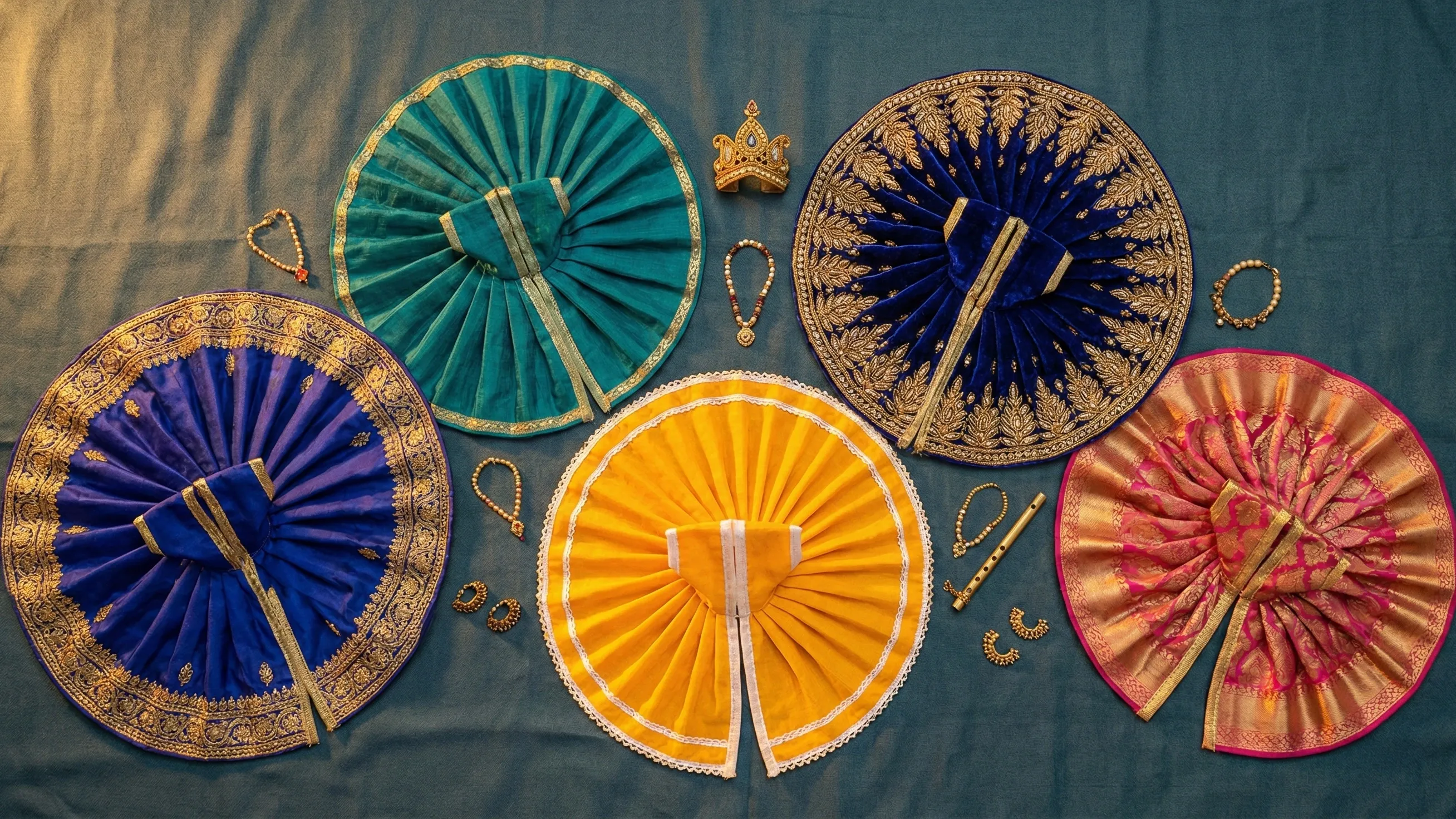
Once you understand each accessory category individually, the guiding principle for putting them together is straightforward: balance the visual weight of the poshak against the visual weight of the accessories, and let one be the anchor while the other supports it. A heavily embroidered festival poshak — deep velvet with full zardozi (metallic threadwork) and mirror work — carries its own magnificence and needs restrained accessories to shine. One clean mukut, a simple tulsi mala, and slender bajuband are enough; adding more risks burying the poshak under competing detail. Conversely, a simple cotton or plain silk poshak in a single colour becomes an invitation for richer accessories: a more ornate jewelled mukut, a layered haar, a stone-set bansuri, and brass payal can transform a quiet fabric into a complete and beautiful shringar. At Gopalji Fashion, when devotees ask us how to get the most from a small accessory collection, our consistent answer is this: two or three thoughtfully chosen pieces used intentionally across different days will always serve you better than a large, mismatched collection used without a sense of proportion. Begin with a mukut that fits, one good bansuri, and a mala — and let everything else grow from there.
Tags