Among all the elements of Laddu Gopal shringar, jewellery carries a particular kind of weight. A poshak, however beautiful, is only one half of the picture — it is the mukut, the mala, the delicate shimmer of a bajuband that completes the look and makes Thakurji's shringar feel truly alive. Many devotees begin with one or two pieces acquired over time and gradually find themselves wondering how to bring it all together as a coherent whole. Others start from scratch and feel uncertain about what to buy first and how to combine it. The truth is that jewellery pairing for Laddu Gopal is not complicated, but it does reward a little thought. Proportion, intention and the character of the poshak are the three things to hold in mind — and once you understand those, every combination you choose will feel right.
The Mukut: Where Every Shringar Begins
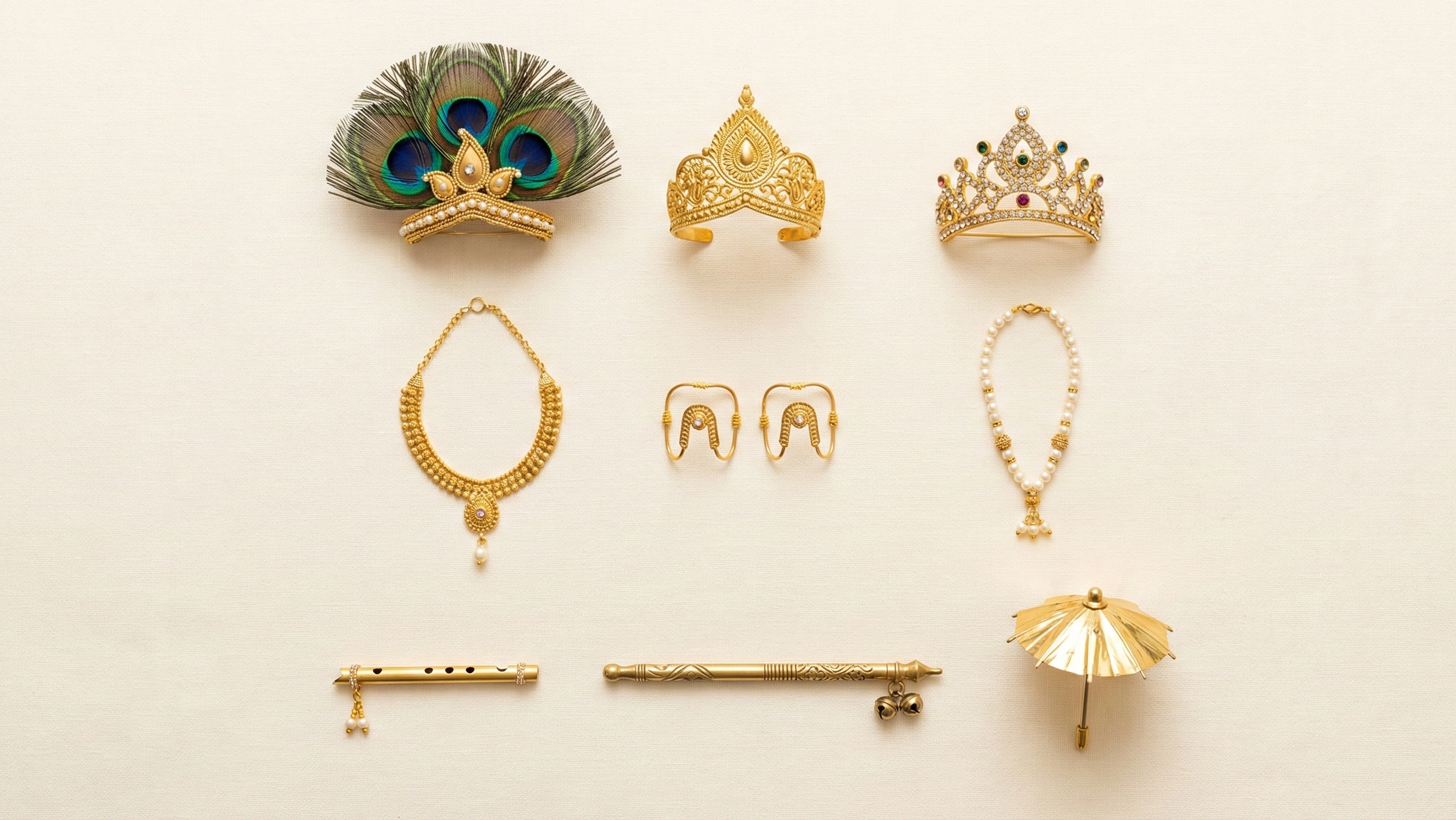
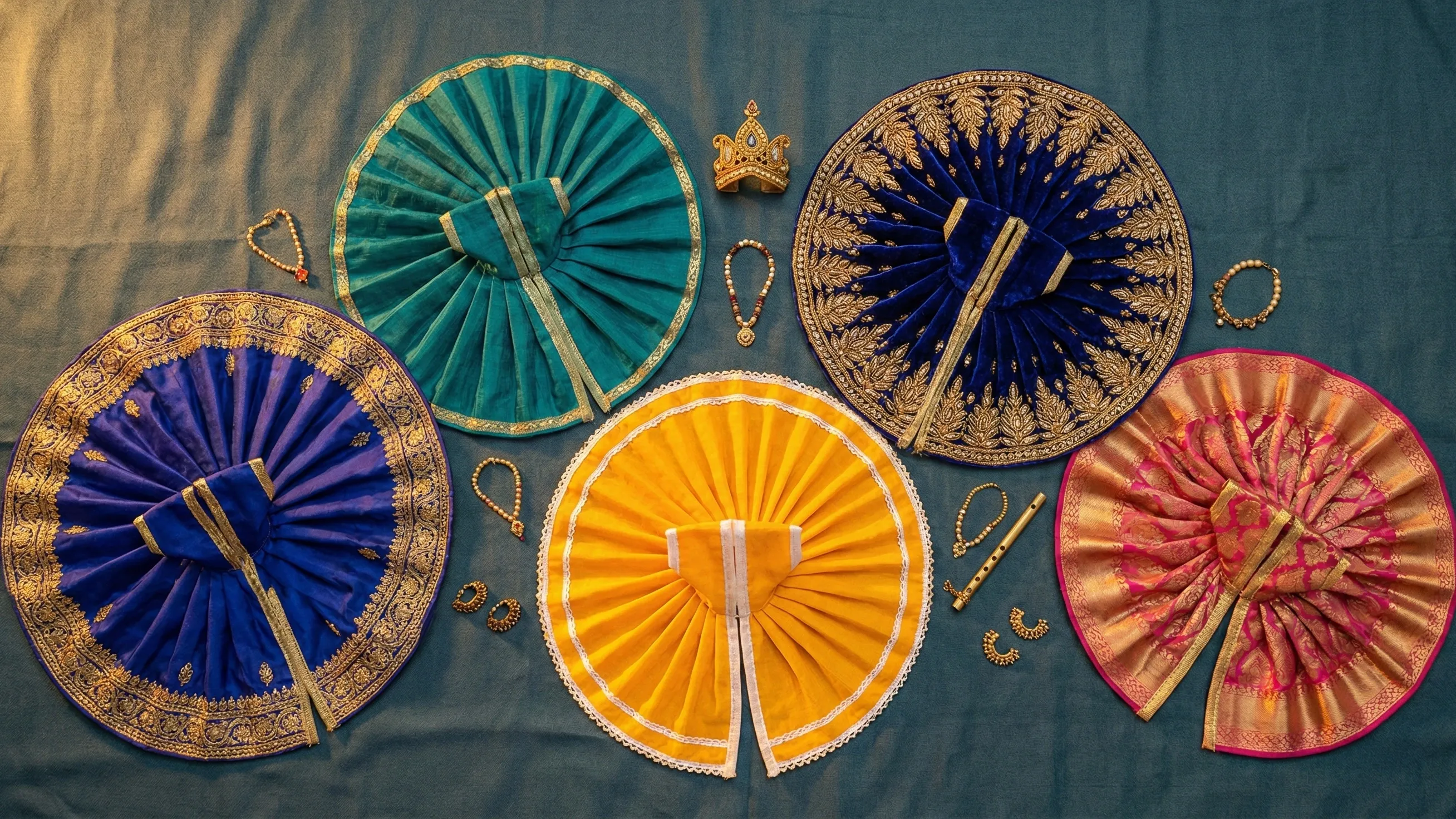
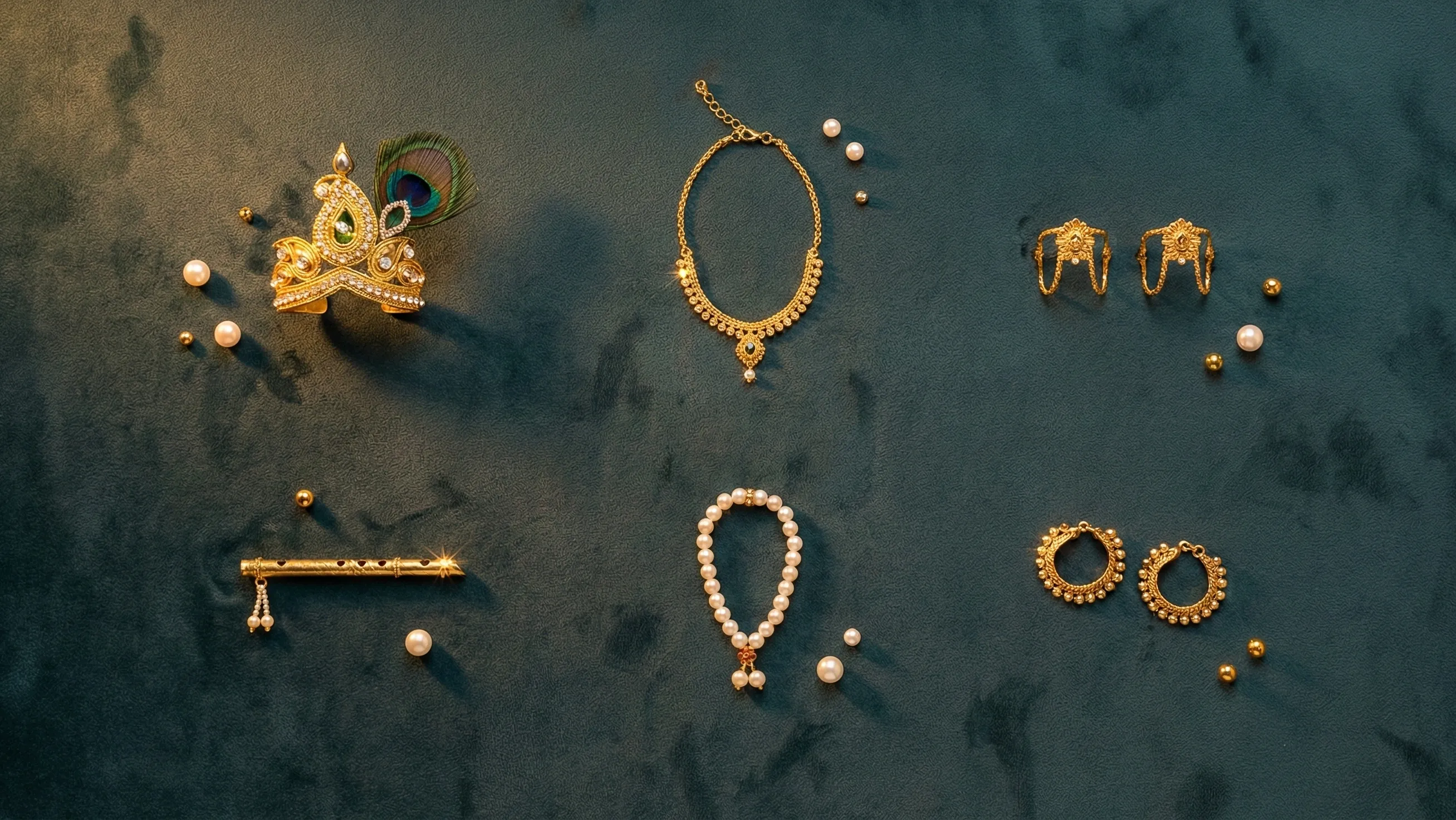
The mukut (crown) is the centrepiece of any shringar. It is placed last but noticed first, and its proportion relative to the idol is the single most important visual decision in jewellery pairing. A mukut that is too tall overwhelms the idol's face; one that is too small gets lost against a richly worked poshak. As a general guide, the mukut's height should be roughly one-third to one-half the height of the idol's head — enough to be clearly visible and regal, but not so large that Thakurji's face disappears beneath it. Beyond proportion, the style of the mukut should echo the character of the poshak. A Banarasi silk poshak with gold zari borders calls for a mukut with gold finish and fine filigree detail. A simple cotton poshak in soft colours is better paired with a lighter peacock-motif mukut or a morpankh (peacock feather) style that carries charm without grandeur. Let the poshak set the tone, and choose the mukut to honour that tone.
- For Size 0-2 idols: a delicate flat peacock-motif mukut or a slim morpankh style — avoid anything too tall or heavy
- For Size 3-5 idols: a medium-height mukut in gold or silver finish, with simple stone or enamel work — the most versatile range
- For Size 6 and above: a taller ornate mukut with layered peaks, filigree panels and stone setting — the idol has the visual presence to carry it
- Gold finish mukuts pair with saffron, red and deep jewel-tone poshak
- Silver finish mukuts pair beautifully with white, pastel blue and light green poshak
Tip: Before placing the mukut, view Thakurji from the front at eye level rather than from above. A mukut that looks right from standing height may sit tilted when seen head-on. Adjust until the crown sits level and straight — this single detail transforms the polish of the whole shringar.
Haar and Mala: Matching to the Poshak
The haar (necklace garland) and mala (flower or bead garland) create the vertical line that draws the eye from Kanha Ji's face down through the poshak — and this line needs to feel balanced. The rule of thumb that experienced devotees use is straightforward: a rich poshak calls for a simpler mala, and a simple poshak can carry a more layered haar. If your Thakurji is dressed in a heavily embroidered velvet or zardozi poshak, a single strand of pearls or a fine gold-finish haar is sufficient — the poshak itself is already doing considerable work. If the poshak is a clean cotton or light silk piece without much embellishment, a multi-strand pearl haar or a layered meenakari (enamel-work) necklace adds the richness the shringar needs. Fresh flower malas — jasmine, marigold or rose — are appropriate every single day, regardless of the poshak. They carry a living fragrance and a sense of offering that no artificial piece can fully replace. When using artificial malas for daily practicality, choose strings of small buds in cream or gold rather than large plastic florals that can look disproportionate on smaller idol sizes.
- Heavy embroidered poshak: single-strand pearl haar or minimal gold-finish chain — do not compete with the poshak
- Simple cotton or georgette poshak: multi-strand pearl haar or layered meenakari necklace to add richness
- Fresh flower mala: always appropriate — jasmine for daily seva, marigold for festivals, rose for Radha Ashtami
- Artificial mala for daily use: small bud strings in cream, white or gold — avoid oversized plastic flowers on Size 1-4 idols
- Tulsi mala: considered deeply sacred for Laddu Gopal — a single round of fine tulsi beads is never out of place
Bajuband and Kangana: The Details That Finish a Look
Bajuband (armbands) and kangana (bracelets or wrist ornaments) are the details most devotees reach for only on festival days, but they deserve to be part of regular shringar far more often than they are. These pieces are subtle by nature — they do not dominate the look the way a mukut or a haar does. What they do is add a sense of completeness, the quiet signal that every part of Thakurji's form has been attended to with care. Gold-finish bajuband in a simple coil or leaf design work across almost every poshak style. For festival occasions, matching the bajuband finish to the mukut creates a visual harmony — if the mukut is gold, the bajuband should also be gold-toned. For daily shringar, even a pair of thin twisted-wire bangles in silver or gold is enough. The size consideration matters here more than anywhere else: bajuband for a Size 1 or 2 idol should be hairline-thin, almost like a thread in metal, while a Size 6 idol can carry wider, more sculptural armbands without looking heavy. If you ever find yourself wondering whether to add bajuband on an ordinary day, the answer is almost always yes — they take less than a minute to place and transform a basic shringar into a finished one.
Tip: Store bajuband and kangana in a small divided box or on a soft cloth, never loose in a tray where they can tangle or scratch against harder pieces. A tangled bajuband is difficult to straighten without bending the metal, and a scratched surface loses its finish quickly.
Payal, Singhasan and the Complete Picture
Payal (anklets) hold a special place in the Krishna bhakti tradition. Bhakti poets from Meera Bai to Surdas wrote of the sound of Kanha Ji's payal — that small chiming note as Lord Krishna moved, danced and played. Placing payal on your Laddu Gopal is not simply an accessory choice; it is a participatory act in a devotional tradition that spans centuries. Slim silver-finish payal with tiny bells, if the idol's form allows for them, are considered auspicious and are particularly meaningful on Janmashtami, Radha Ashtami and Holi. The singhasan (throne or seat) is the element that is often overlooked in jewellery and accessory conversations, but it is very much part of the ensemble. A plain singhasan under a richly dressed Thakurji creates a visual imbalance, while a decorative throne — carved wood, velvet-lined or gold-painted — grounds the entire shringar and frames Kanha Ji with the dignity the moment deserves. Think of the singhasan not as furniture but as the base note that makes every other element resonate.
- Payal style: slim silver finish with micro bells — appropriate for festivals and special days; delicate metal rings for everyday
- Payal placement: if the idol's posture allows, loop gently around the ankles; for standing idols, a tiny loop at the base of the feet is equally valid
- Singhasan for daily shringar: a simple wood or brass seat with modest finish
- Singhasan for festival shringar: velvet-lined or gold-painted throne with decorative back panel — choose one whose width is slightly broader than the idol's seated width
- Coordinate the singhasan colour with the poshak where possible: a deep red velvet throne under a golden Diwali poshak creates a genuinely regal effect
Festival Layering, Daily Restraint and Care
The difference between daily shringar and festival shringar in jewellery terms is not about buying more pieces — it is about knowing when to add layers and when to let simplicity speak. For daily seva, a mukut, a single mala and either bajuband or a haar is more than enough. The daily routine should feel peaceful, not laborious. For festivals, layer intentionally: add the payal, bring out the fuller haar, place the bajuband and the kangana together, and choose the singhasan that matches the occasion. The total should still feel balanced, never cluttered. Proportion to idol size is the discipline that makes layered shringar look devotional rather than decorative. A final and often neglected matter is storage and care. Jewellery pieces for Laddu Gopal shringar are small and delicate, and they are kept near an active pooja space where agarbatti (incense) smoke and moisture are constant presences. Both agarbatti smoke and humidity are damaging — smoke darkens metal finishes over time and deposits a thin film that dulls even the finest gold work, while moisture causes tarnishing and weakens any adhesive setting in stone pieces. Store all jewellery away from the direct path of agarbatti smoke, in a covered box or soft-pouched tray. After each use, wipe gold and silver-finish pieces with a clean dry cloth to remove any residue. This small habit, done consistently, keeps your collection looking beautiful through years of devoted use.
Tip: Once or twice a year, lay all your Thakurji's jewellery out in full light and check every piece. Look for bent prongs, loose stones, tarnished sections or tangled chains. A small investment in a jewellery repair or cleaning session before a major festival — Janmashtami or Diwali — ensures everything is ready when the moment arrives.
Tags