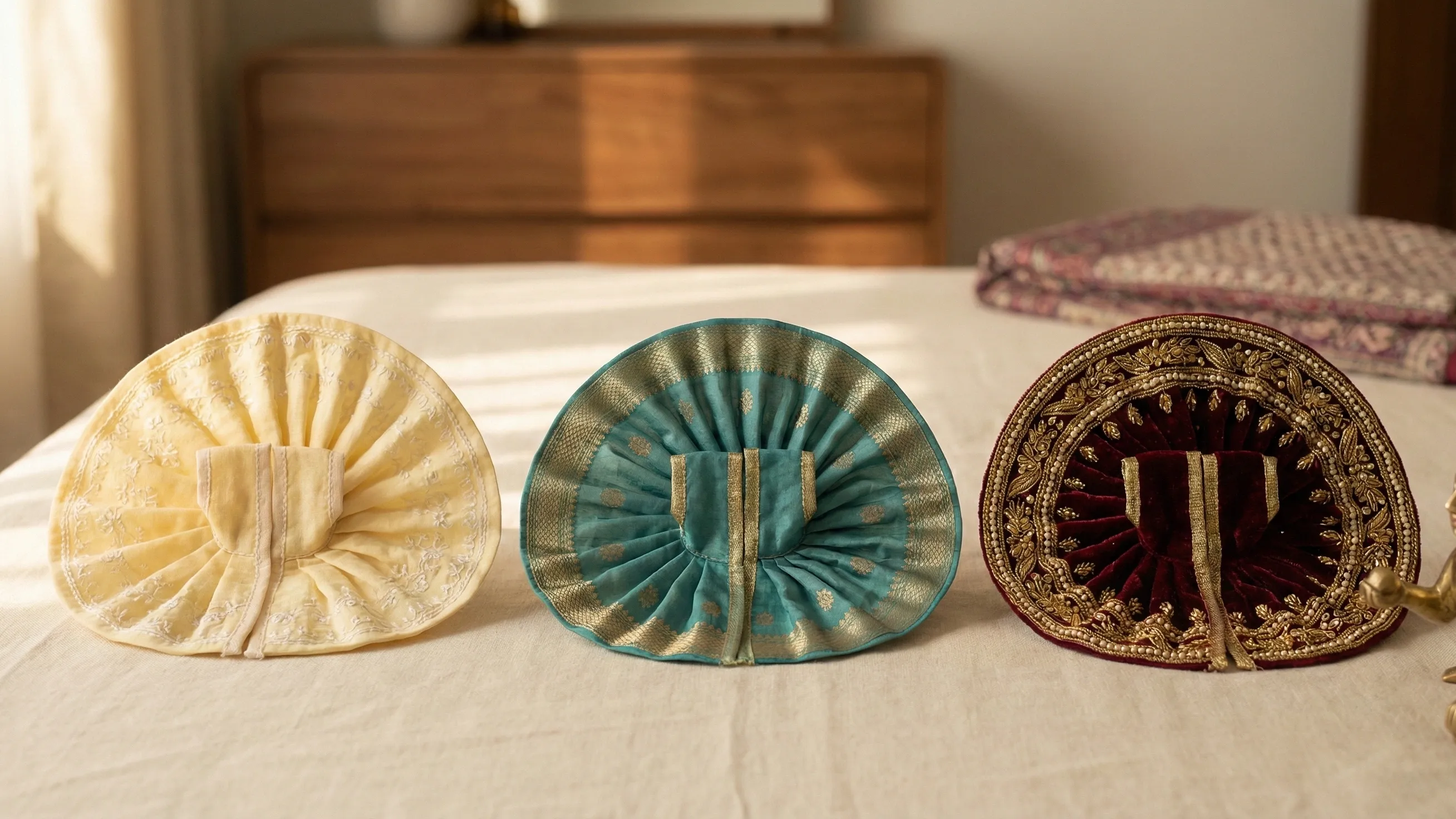
Before the poshak is chosen, before the mukut (crown) is placed, before even the first aarti (lamp offering) is lit — there is the singhasan (throne). It is the one element of the home mandir that sets the tone for everything else. A well-chosen singhasan tells Kanha Ji, and tells everyone who enters the room, that this is a space held with love and intention. Yet many devotees spend weeks deliberating over which poshak to order and barely a few minutes thinking about where their Thakurji will actually sit. The singhasan deserves far more consideration than that. It is not simply a platform or a stand — it is the centrepiece of your Laddu Gopal's world, the frame through which all shringar (decoration) is seen, and the foundation that makes everything placed upon it look either beautiful or ordinary.
Choosing the Right Material
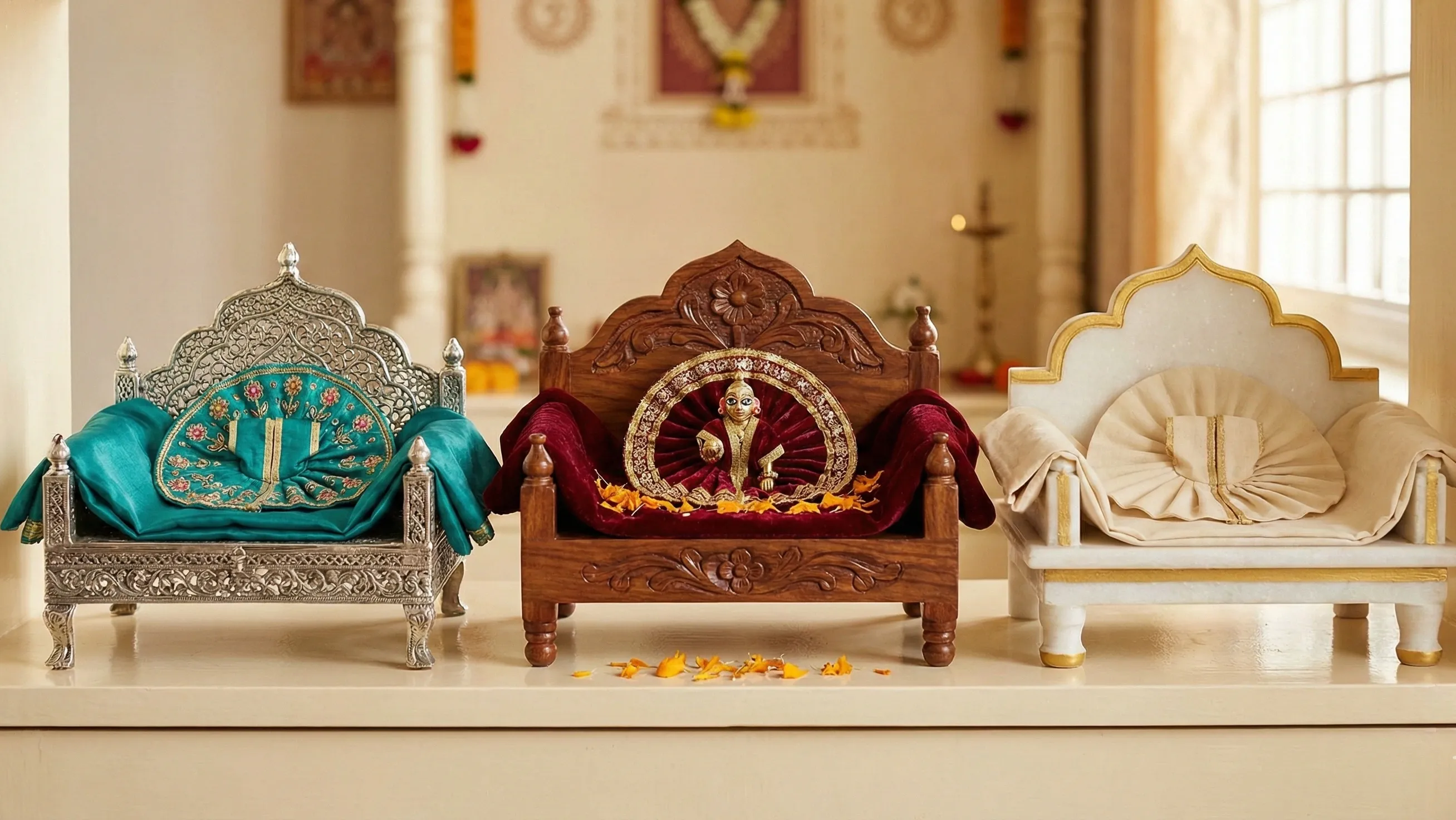
The most traditional singhasans are made from wood, and for good reason. Sheesham (Indian rosewood) and teak are the most widely used — both are dense, durable hardwoods with a warm, golden-brown grain that complements the rich colours of poshak beautifully. Sheesham in particular has a natural luster that looks richer over time rather than dull. Brass singhasans carry a different quality — they are heavier, more formal, and reflect lamplight in a way that adds genuine radiance to the shrine, especially during evening aarti. Marble or stone singhasans, usually white or pale green, create a cool, temple-like aesthetic that many devotees associate with the great shrines of Mathura and Vrindavan. Beyond material, there are also style variations to consider — a sofa-style singhasan with a padded backrest is especially popular for larger idols and gives Thakurji a sense of dignified repose, while a jhula (swing) is deeply beloved for its associations with the playful imagery of Kanha Ji's childhood. A simple chowki (flat wooden platform) is the most understated option and often the most versatile, sitting cleanly inside glass-fronted mandir cabinets where a taller seat would not fit.
- Sheesham (rosewood): warm grain, natural lustre, deepens with age — most common choice for home mandirs
- Teak: dense and durable, resists humidity well, slightly lighter in colour than sheesham
- Brass: heavier and more formal, reflects aarti light beautifully, suited to larger, grander shrines
- Marble or stone: cool temple aesthetic, especially white or pale green, pairs well with silk poshak
- Sofa-style: padded backrest and seat, ideal for larger idols, creates a sense of royal repose
- Jhula (swing): beloved for its connection to Krishna's childhood lila (divine play), available in wood or brass
Getting the Size Right
Sizing a singhasan is one of the most overlooked practical details, and an ill-proportioned throne is immediately obvious even to an untrained eye. The standard guidance is that the singhasan should be approximately one and a half to two times the seated height of your idol — not the standing height. This gives Thakurji proper visual presence on the seat without the throne dwarfing the idol or the idol overhanging the edges. Beyond the idol itself, remember that the singhasan also needs to hold a small pooja thali (offering plate) alongside or in front, space for an incense holder, and occasionally a small diya. When in doubt, go slightly larger — a throne that feels generous reads as abundance, while one that is too small reads as cramped and makeshift.
Tip: Place your Thakurji on a folded cloth and measure the seated height before you shop. Note that measurement alongside your idol's standing height and take both numbers with you. It saves the trouble of returns and exchanges, which can be frustrating with handcrafted items.
Placement Within the Home
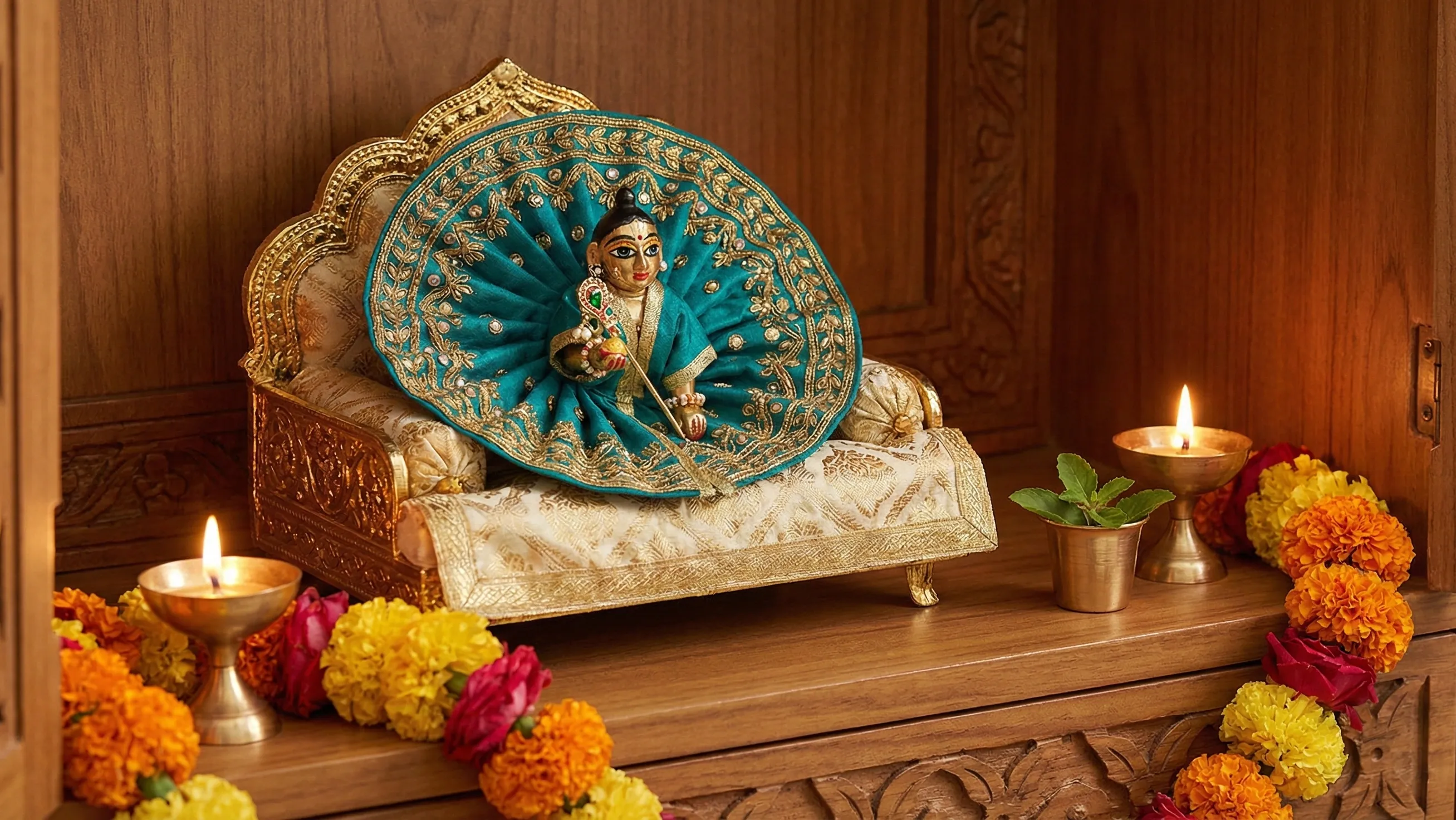
Where you position the singhasan in the room shapes the entire experience of seva. The ideal spot catches natural morning light — east-facing walls or corners that receive the early sun create a warm, golden quality during the morning shringar that no artificial light quite replicates. The shrine should sit at approximately eye level when you are seated on the floor for pooja, which in most homes means a platform or shelf between eighteen and thirty inches from the floor. Avoid placing the singhasan directly on the floor, in a dark corner, or on a cluttered surface — each of these diminishes the sense of sanctity that a dedicated space requires. An uncluttered backdrop matters too. A simple, clean wall — even better if it has a small decorative element like a thoran (hanging decoration) or a painted motif — allows Thakurji to be the visual focus rather than competing with household objects.
- East-facing placement for natural morning light during shringar and aarti
- Eye level when seated — roughly eighteen to thirty inches from the floor in most homes
- Elevated off the floor on a clean shelf, platform, or mandir cabinet
- Uncluttered backdrop — clear wall, simple thoran or decorative motif behind the singhasan
- Away from the kitchen stove and bathroom walls — traditional guidelines and practical hygiene both point the same way
Visual Harmony with the Poshak
The singhasan and the poshak are in constant conversation with each other — every time you dress your Laddu Gopal, you are essentially composing a small picture, and the throne is always part of that composition. A dark sheesham singhasan with carved borders creates a natural contrast with lighter poshak colours — ivory, saffron, pale pink, or pastel blue all stand out beautifully against a deep brown wood. Brass singhasans have a golden warmth that harmonises with the rich festival poshak of winter — deep red velvet, emerald green, royal blue — where the metallic surface echoes the zari (woven metalwork) borders on the poshak itself. Marble or stone singhasans offer the cleanest neutral base and work across nearly every poshak colour, making them a forgiving choice if you change poshak frequently. Seasonal elements also play a role in this composition. Fresh marigold or rose petals placed at the base of the singhasan, a small seasonal flower tucked near the throne, and a soft ghee diya or electric lamp positioned to cast warm light from one side — these small additions lift the entire visual without requiring any elaborate arrangement.
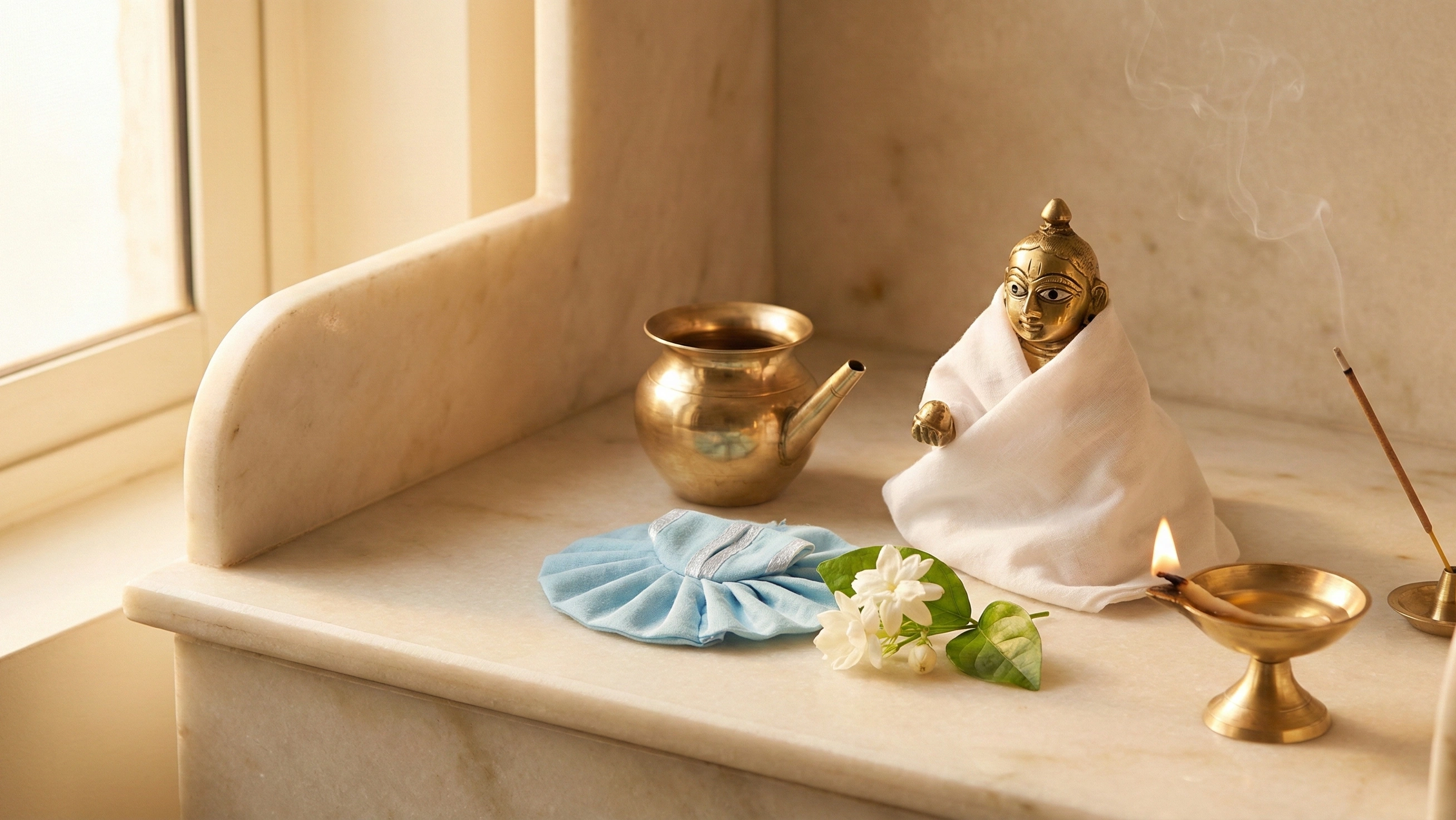
Tip: When you receive a new poshak, hold it gently in front of your singhasan before dressing Thakurji in it. Seeing the colour against the throne material in your actual light takes only a moment and tells you immediately whether the combination will look beautiful or feel off.
Sincerity Above Grandeur
It would be easy to conclude from all of this that the ideal singhasan must be expensive, elaborately carved, and perfectly matched to a professional interior. That is not what this is about. Some of the most beautiful home mandirs belong to devotees with a modest wooden chowki (platform), a single cotton poshak freshly pressed, one small diya, and genuine love in their daily seva. The singhasan matters because it reflects how we hold the space for Thakurji in our lives — and that has nothing to do with cost. At Gopalji Fashion, the poshak we make is designed to look beautiful in any setting, from an ornate brass shrine in a large household mandir to a simple sheesham chowki in a small apartment. What we have noticed, across years of working with devotees, is that the homes where Kanha Ji truly seems to glow are not necessarily the grandest — they are the ones where everything in the shrine, however simple, has been placed with attention and care. Start with what you have. Tend to it with sincerity. The singhasan, like the seva itself, will grow into exactly what it needs to be.
Tags